
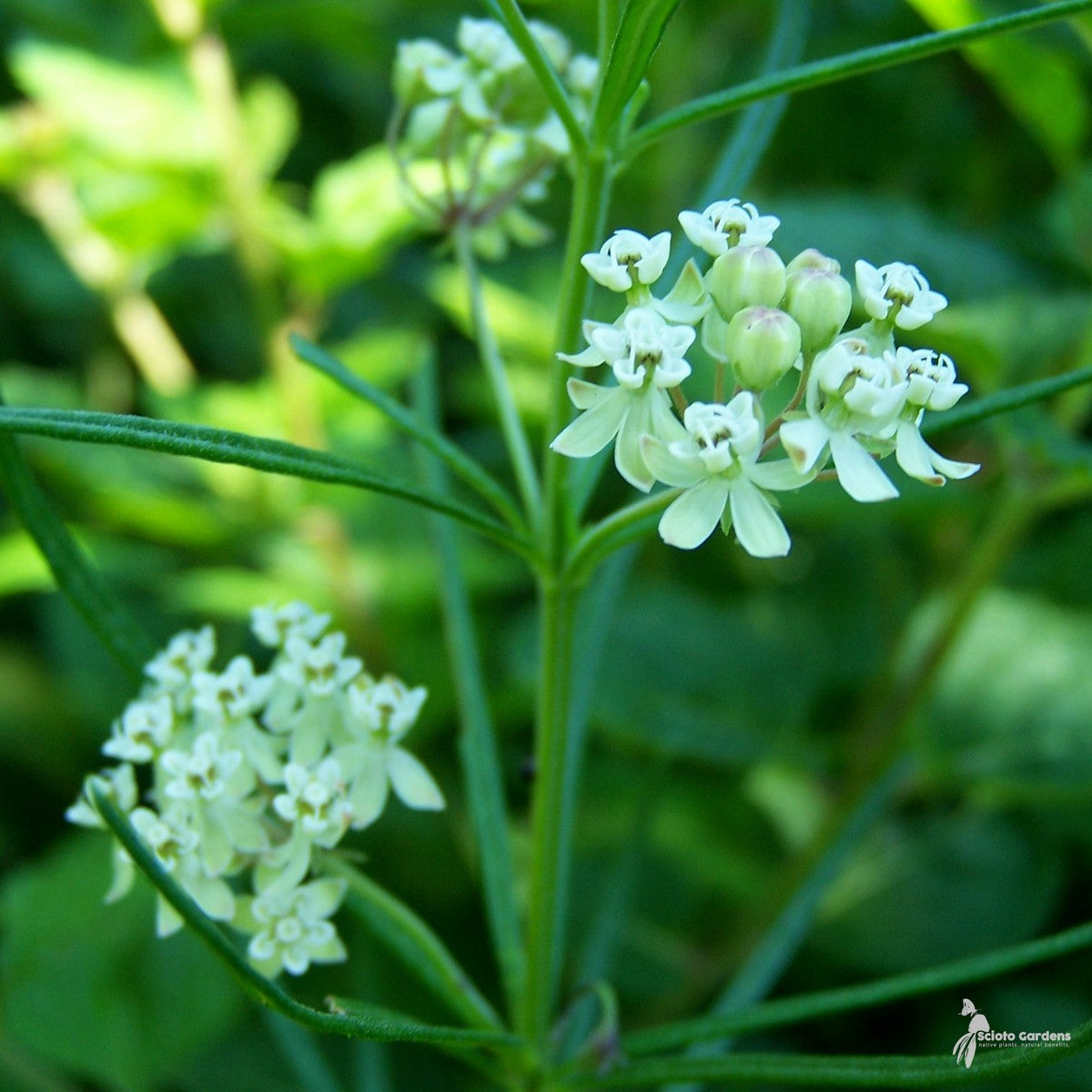
Horsetail Milkweed, also known as Whorled Milkweed, is a pioneering species with distinctive needle-like leaves arranged in whorls around the central, unbranched stems. The plant has a very upright growth habit with a fleshy, fibrous root system that is strongly rhizomatous. It tends to spread aggressively in areas of poor, dry soil where many other plants struggle to dominate. This species is not able to compete with taller plants and prefers to grow in open, infertile, disturbed areas where the competition is limited. It requires well-draining soils and tolerates blazing hot sun and drought. The milky latex sap is toxic to mammals, so it is unbothered by rabbits and deer and easily able to establish itself in large colonies where the growing conditions are preferable. The flowering period is fairly long for this species, but the flowers are smaller and not as showy as many of the other milkweeds. However, the fine-textured foliage turns bright yellow and orange in fall, adding interest to the landscape along with its decorative slender seed pods. Milkweeds are incredibly important plants because they act as a larval host and as a nectar source for adult butterflies and other insects. North America’s celebrity butterfly, the Monarch, lays her eggs on milkweed plants. The distinctive yellow, black, and white striped caterpillars eat only the leaves of this genus, making them a vital part of the ecosystem from coast to coast. It also hosts a specialist moth, the Milkweed Tussock Moth, as well as many milkweed beetles and bugs. They are very active plants, always crawling with beautiful and interesting creatures that are drawn to them! Milkweeds are a productive, necessary and worthy group of plants to include in any landscape.
Sources:
Growing and Propagating Wildflowers by William Cullina
Missouri Botanical Garden
Lady Bird Johnson Wildflower Center
Illinois Wildflowers
