


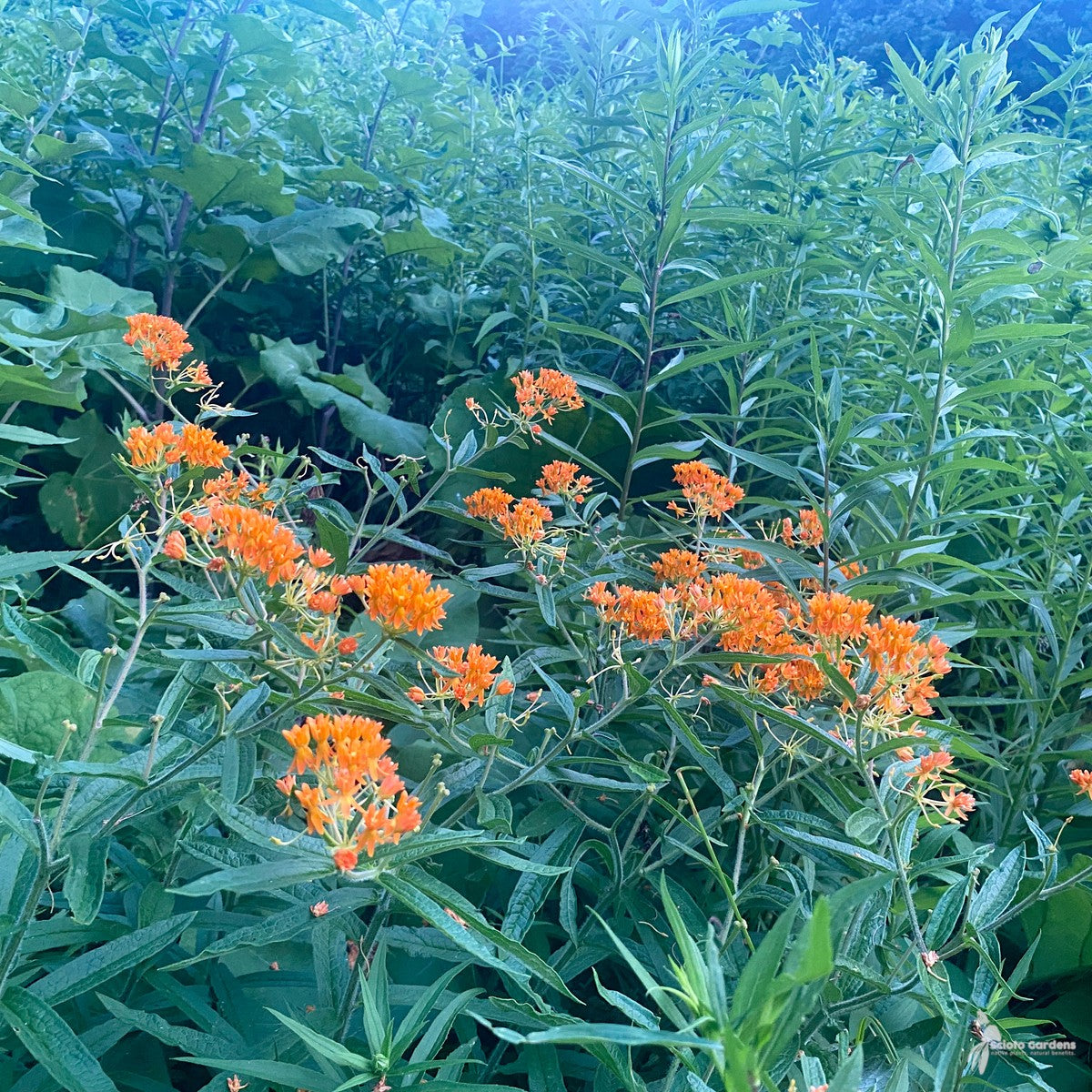
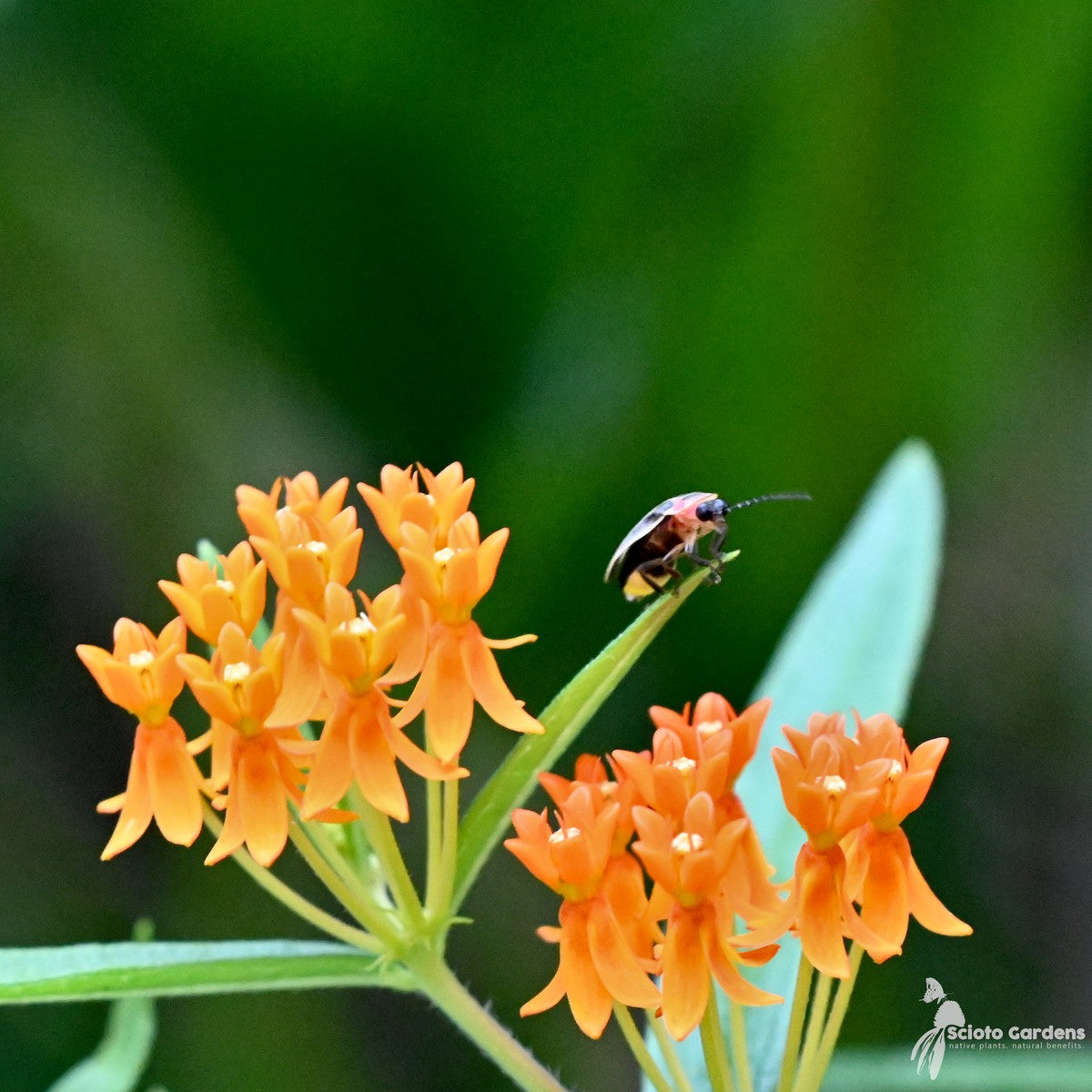
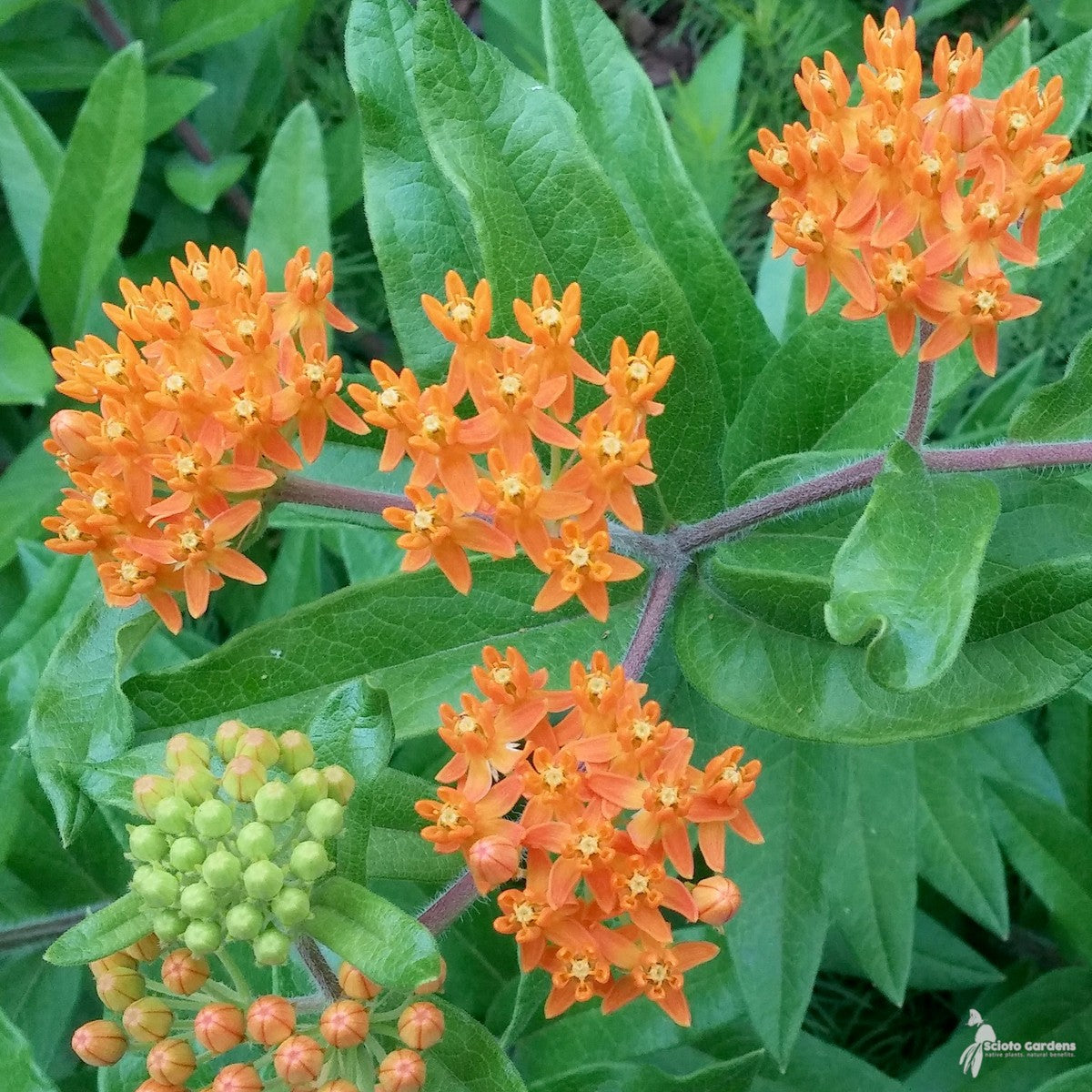
Butterfly Weed is one of our showiest and most easily recognizable native wildflowers. It has bright orange flower clusters atop mounded, bushy, narrow-leaved foliage throughout the summer. The flowers are long-lasting and very attractive to gardeners and pollinators alike. This species is a butterfly magnet, guaranteed to bring them to your garden or meadow! It looks stunning when planted with many other medium-sized native flowers, especially the similarly sized Narrow-leaved Mountain Mint, which blends beautifully with the foliage of Butterfly Weed. These two plants together make for an unbeatable combination for pollinator gardens.The root of this species was once commonly used medicinally for treating lung ailments and is sometimes still referred to as Pleurisy Root. The thick and knobby taproot of mature plants can extend several feet below the soil, giving Butterfly Weed an excellent tolerance to drought and poor, dry soils. However, it absolutely requires the soil to be well-draining, especially during the wet winter months, to avoid rotting. Milkweeds are incredibly important plants because they act as a larval host and as a nectar source for adult butterflies and other insects. North America’s celebrity butterfly, the Monarch, lays her eggs on milkweed plants. The distinctive yellow, black and white striped caterpillars eat only the leaves of this genus, making them a vital part of the ecosystem from coast to coast. It also hosts a specialist moth, the Milkweed Tussock Moth, as well as many milkweed beetles and bugs. They are very active plants, always crawling with beautiful and interesting creatures that are drawn to them! Milkweeds are a productive, necessary, and worthy group of plants to include in any landscape.
Sources:
Herbaceous Perennial Plants by Allan M. Armitage
Growing and Propagating Wildflowers by William Cullina
The Midwestern Native Garden by Charlotte Adelman & Bernard L. Schwartz
Eastern/Central Medicinal Plants and Herbs by Steven Foster and J
