


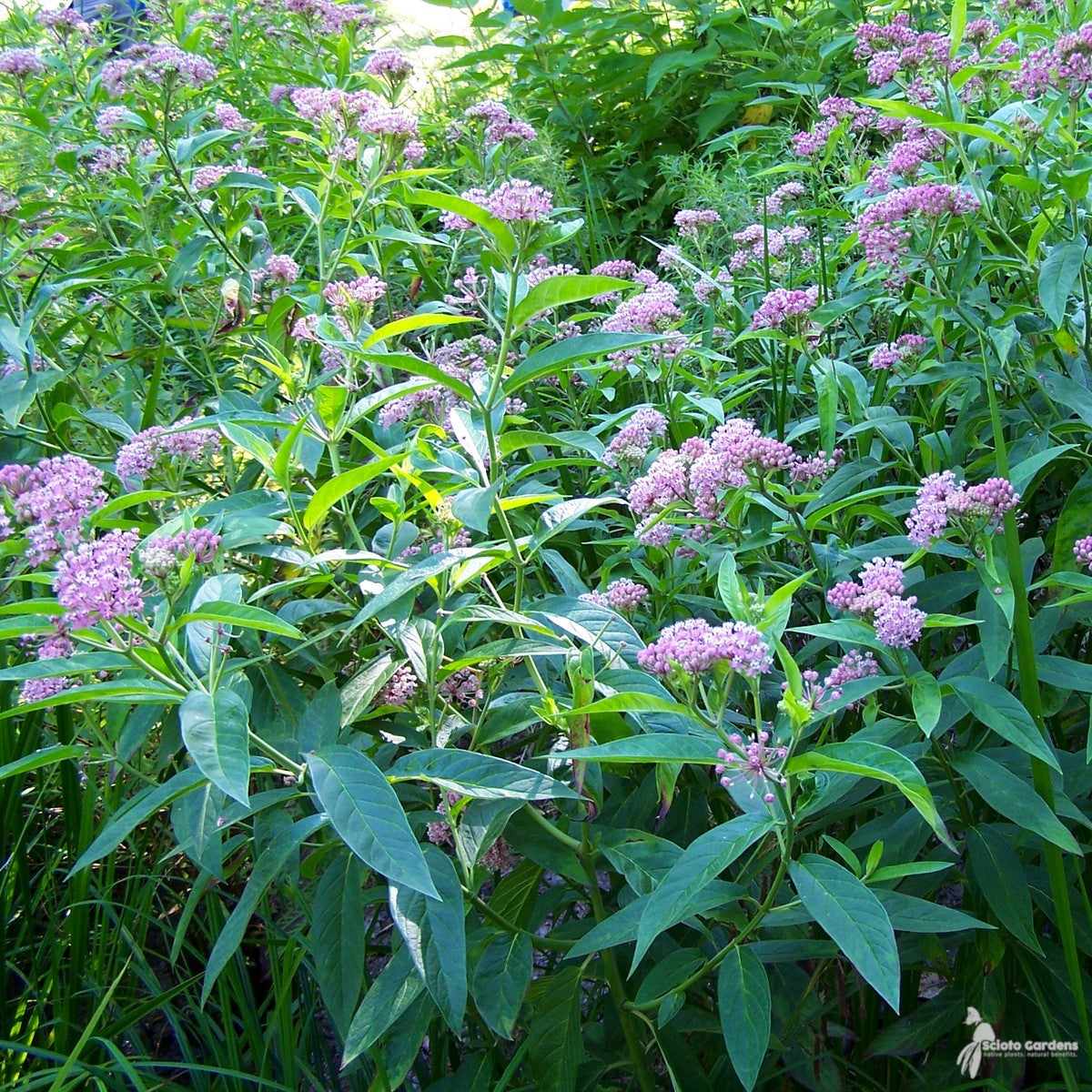
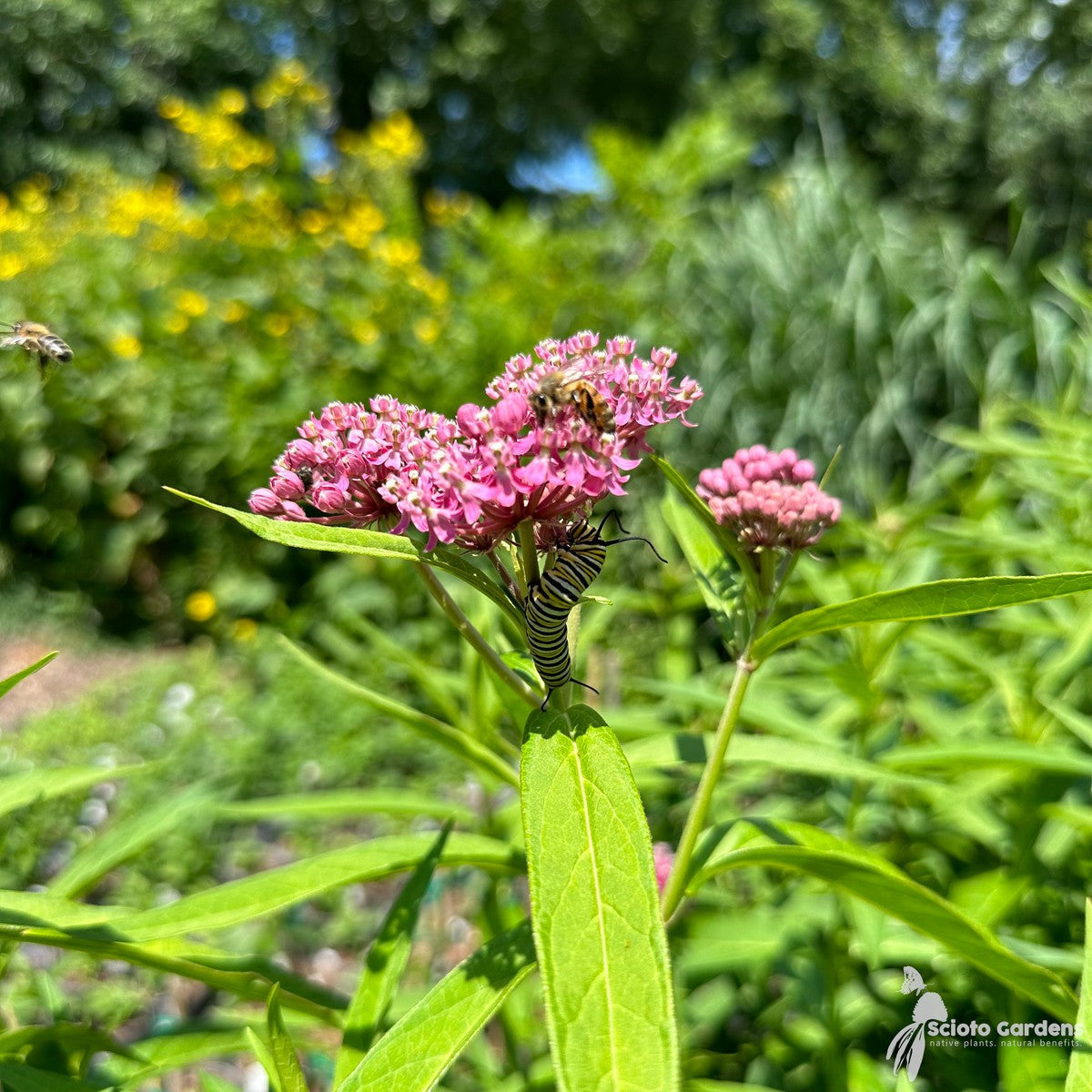
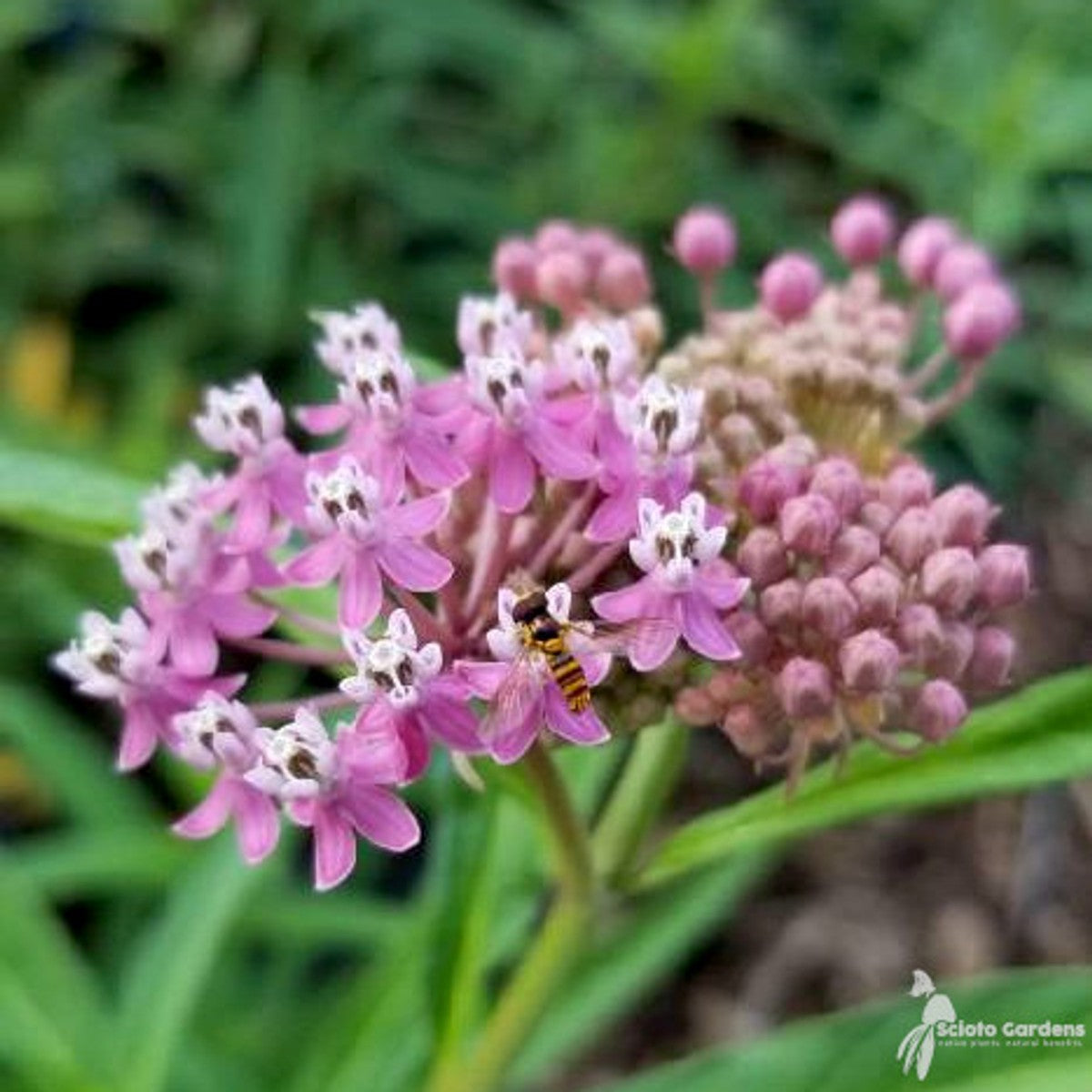
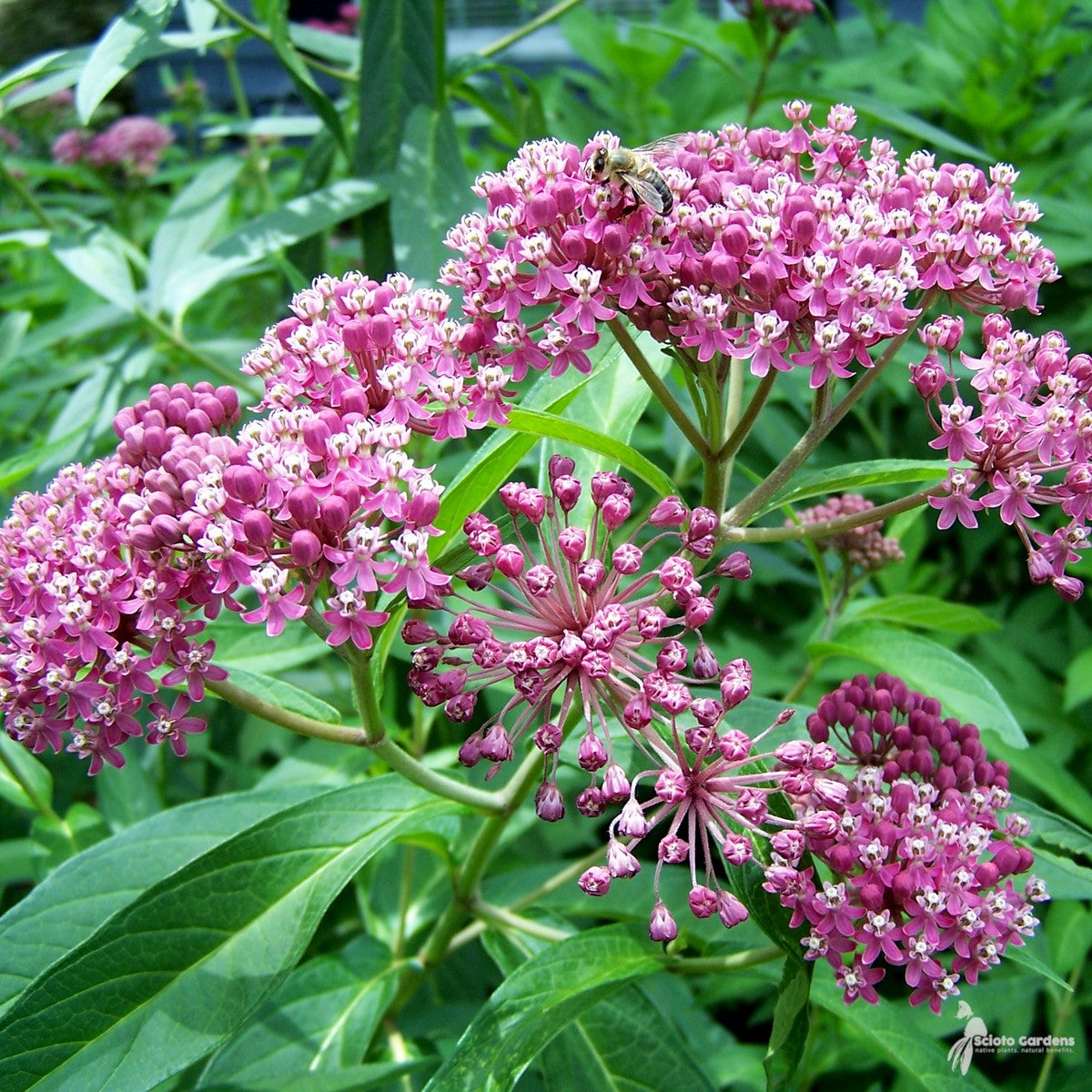
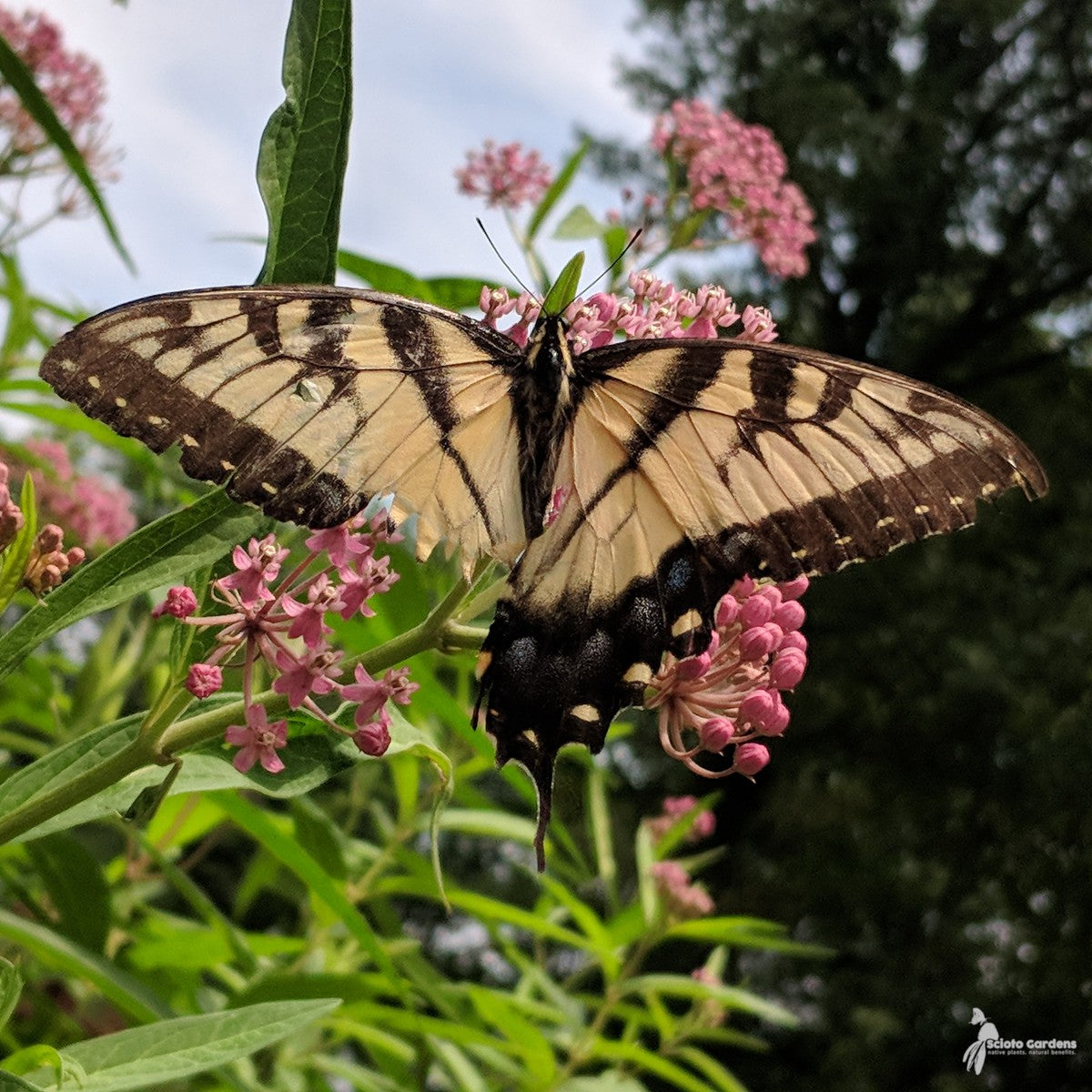
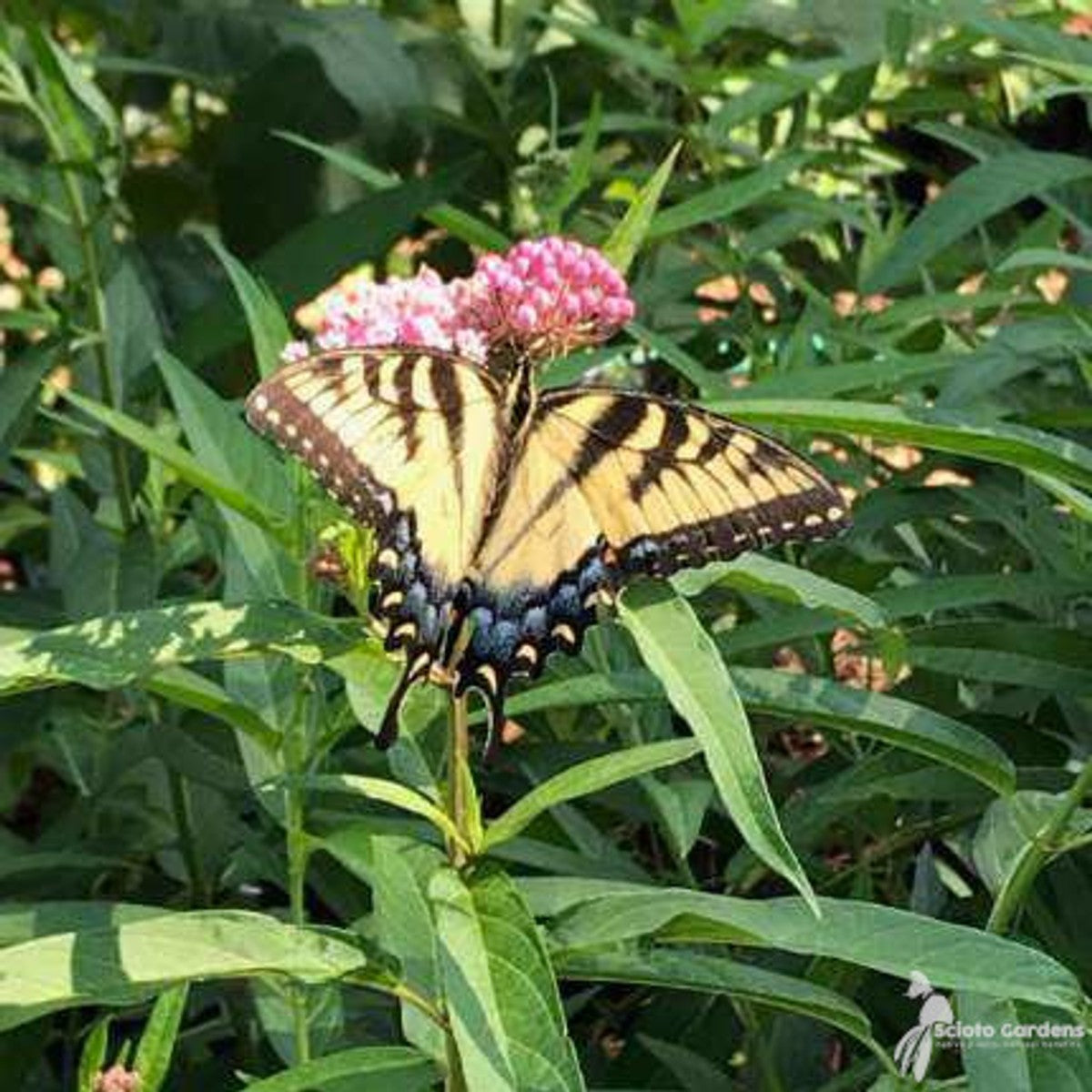
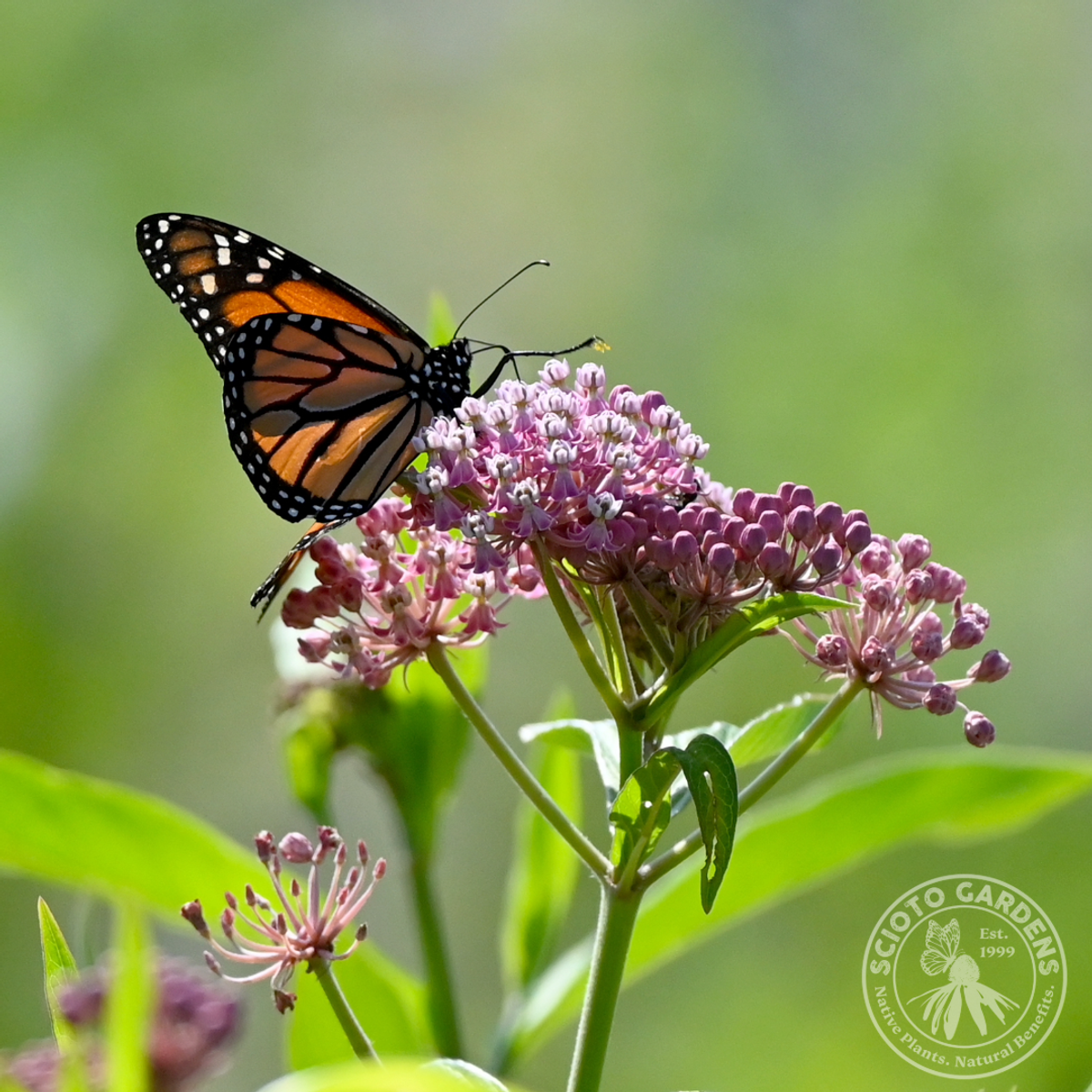
Swamp Milkweed is one of our most wide-ranging, ornamental, and ecologically valuable native milkweed species. It is a tall, upright, strongly clumping perennial typically found in (and named for) swampy growing conditions. It grows in high-quality habitats as well as in degraded landscapes, such as drainage ditches. The preference is for full to partial sun in moist to wet, mucky soil rich in organic matter. It has a poor tolerance to hot, dry sites and drought, but it can adjust to average garden conditions if it is provided with water during summer droughts. During the month-long blooming period, the bright pink flower clusters fill the air with the strong fragrance of vanilla and are eagerly visited by many butterflies, bees and even Ruby-throated Hummingbirds for their sweet nectar. Milkweeds are incredibly important plants because they act as a larval host and as a nectar source for adult butterflies and other insects. North America’s celebrity butterfly, the Monarch, lays her eggs on milkweed plants. The distinctive yellow, black, and white striped caterpillars eat only the leaves of this genus, making them a vital part of the ecosystem from coast to coast. It also hosts a specialist moth, the Milkweed Tussock Moth, as well as many milkweed beetles and bugs. They are very active plants, always crawling with beautiful and interesting creatures that are drawn to it! Milkweeds are a productive, necessary, and worthy group of plants to include in any landscape. This species' tolerance to soggy, water-logged conditions helps to extend the range of habitats for this indispensable genus.
Sources:
Growing and Propagating Wildflowers by William Cullina
The Midwestern Native Garden by Charlotte Adelman & Bernard L. Schwartz
Missouri Botanical Garden
Lady Bird Johnson Wildflower Center
Illinois Wildflowers
Grow Native! Salt-Tolerant Native Plants
