


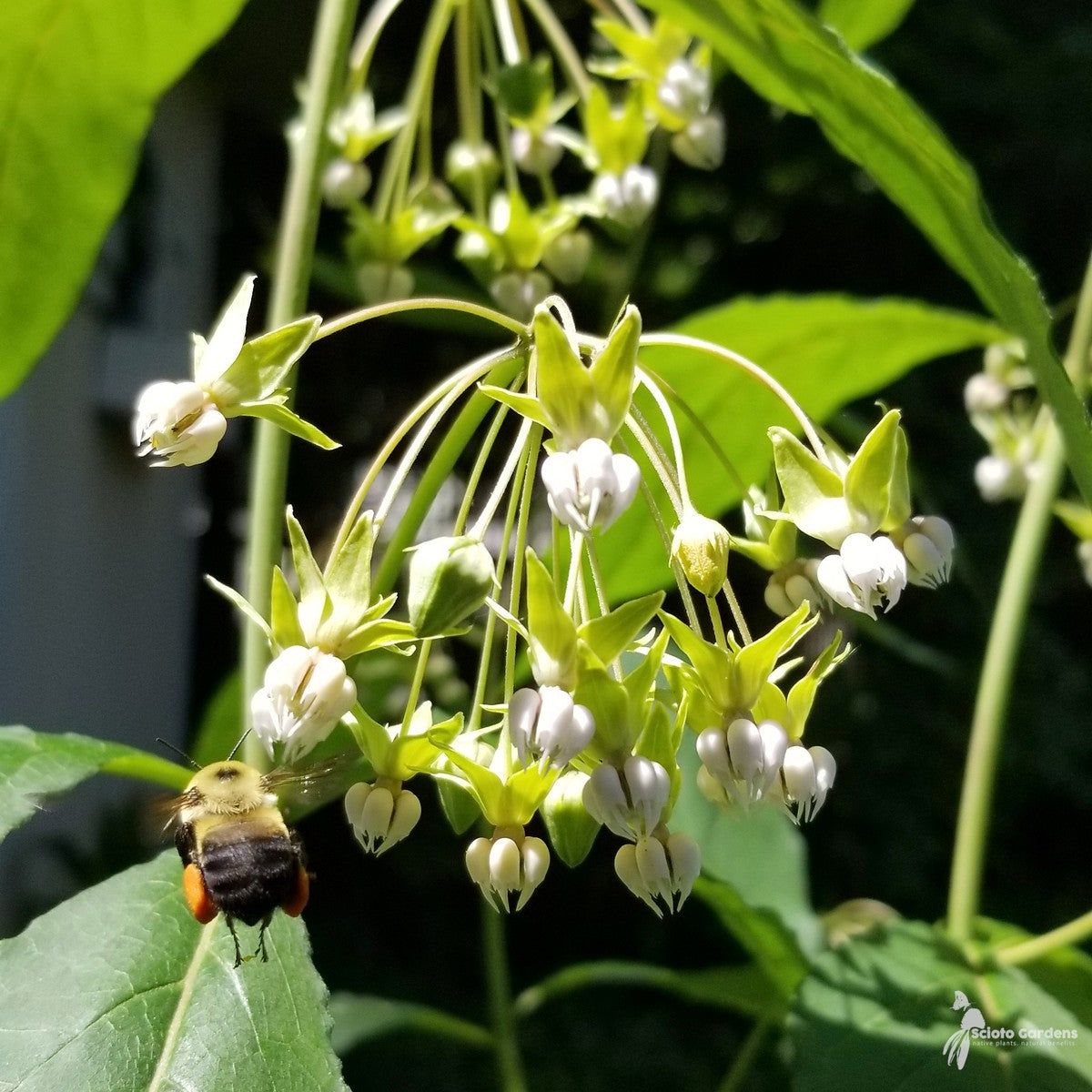
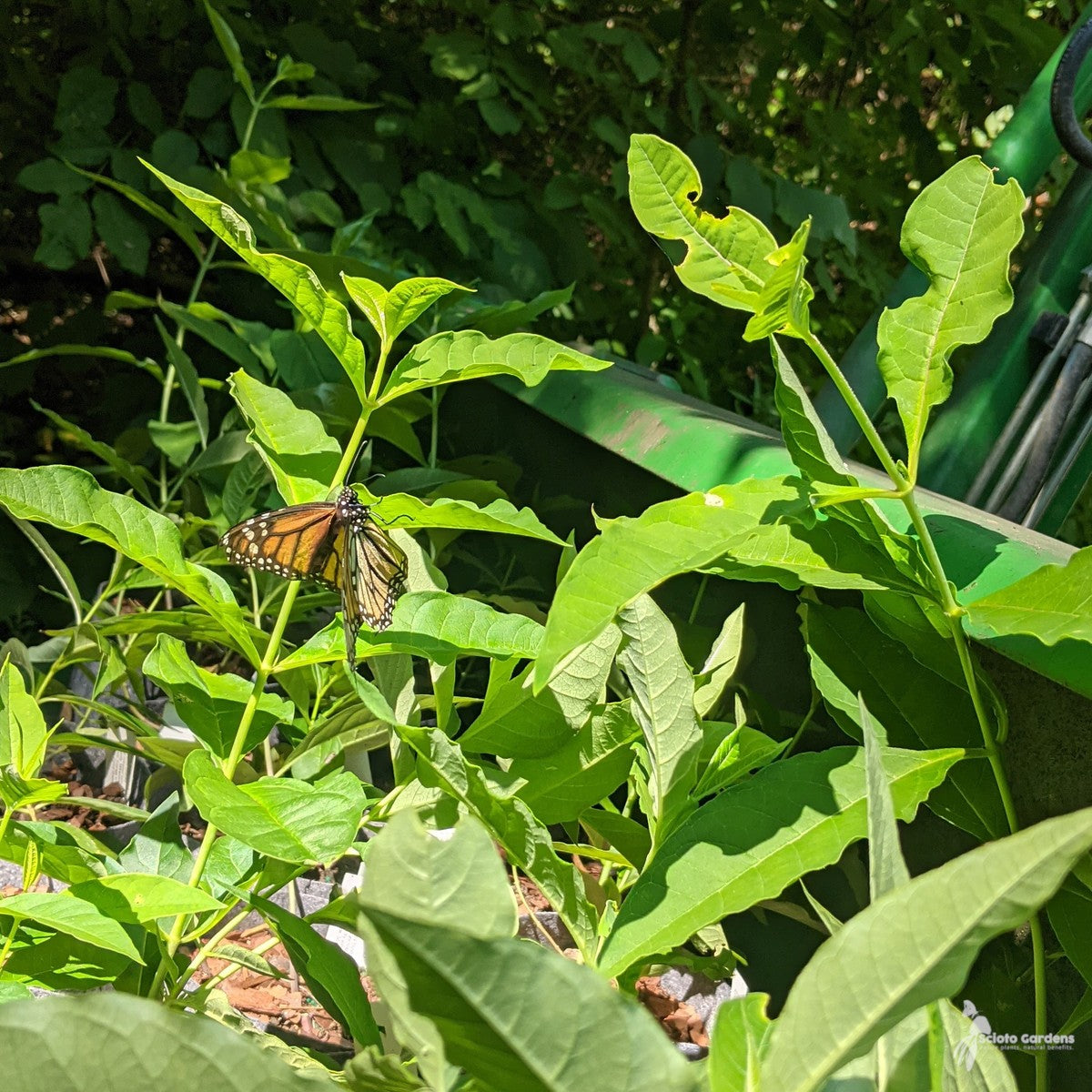
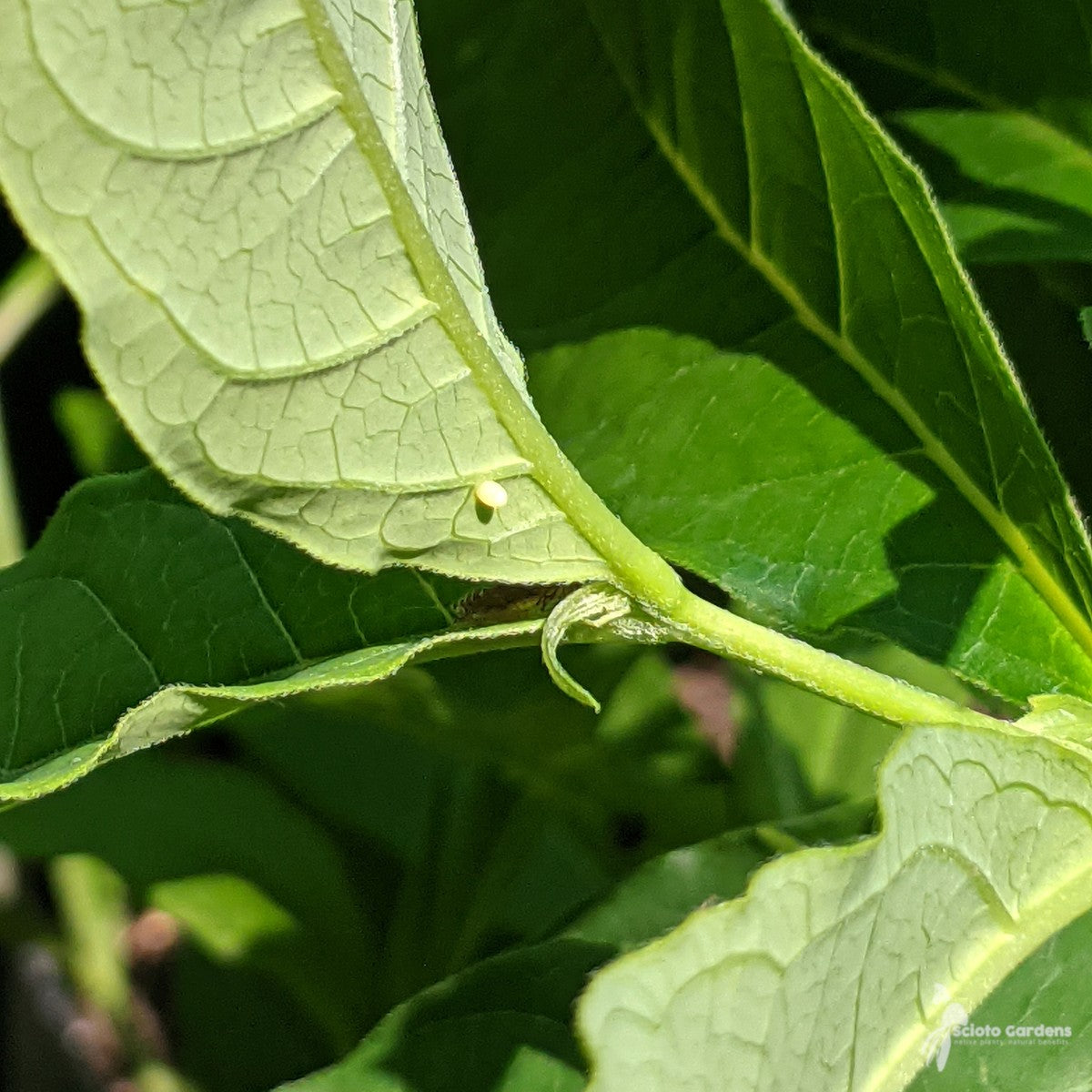
Poke Milkweed, also known as Tall Milkweed, is an upright, unbranched perennial native to Ohio. It is the most shade-tolerant of Ohio's native milkweed species and is typically found growing in moist, upland woods and openings and along the woodland edges. It is similar in appearance to Common Milkweed, often growing just as tall. This milkweed can tolerate both full sun and full shade, but it prefers rich, moist, well-drained soils in partial shade where it will look full, healthy, and floriferous. The flowers are produced in elegantly drooping umbels made up of many bi-colored flowers that range from lavender to pinkish-white and green. They have a strong, enticing vanilla fragrance and the blooming period lasts for roughly one month. The root system consists of a deep taproot, making transplanting of Poke Milkweed rather difficult. Once it is planted in its final location, it will generally take a year or two to settle in and begin looking robust. Rabbits tend to nibble on this plant, so some protection may be necessary to help it to get established.Milkweeds are incredibly important plants because they act as a larval host and as a nectar source for adult butterflies and other insects. North America's celebrity butterfly, the Monarch, lays her eggs on milkweed plants. The distinctive yellow, black, and white striped caterpillars eat only the leaves of this genus, making them a vital part of the ecosystem from coast to coast. It also hosts a specialist moth, the Milkweed Tussock Moth, as well as many milkweed beetles and bugs. They are very active plants, always crawling with beautiful and interesting creatures that are drawn to them! Milkweeds are a productive, necessary and worthy group of plants to include in any landscape. The shade tolerance of this species helps to extend the range of habitats for this indispensable genus.
Sources:
Growing and Propagating Wildflowers by William Cullina
Lady Bird Johnson Wildflower Center
Illinois Wildflowers
