


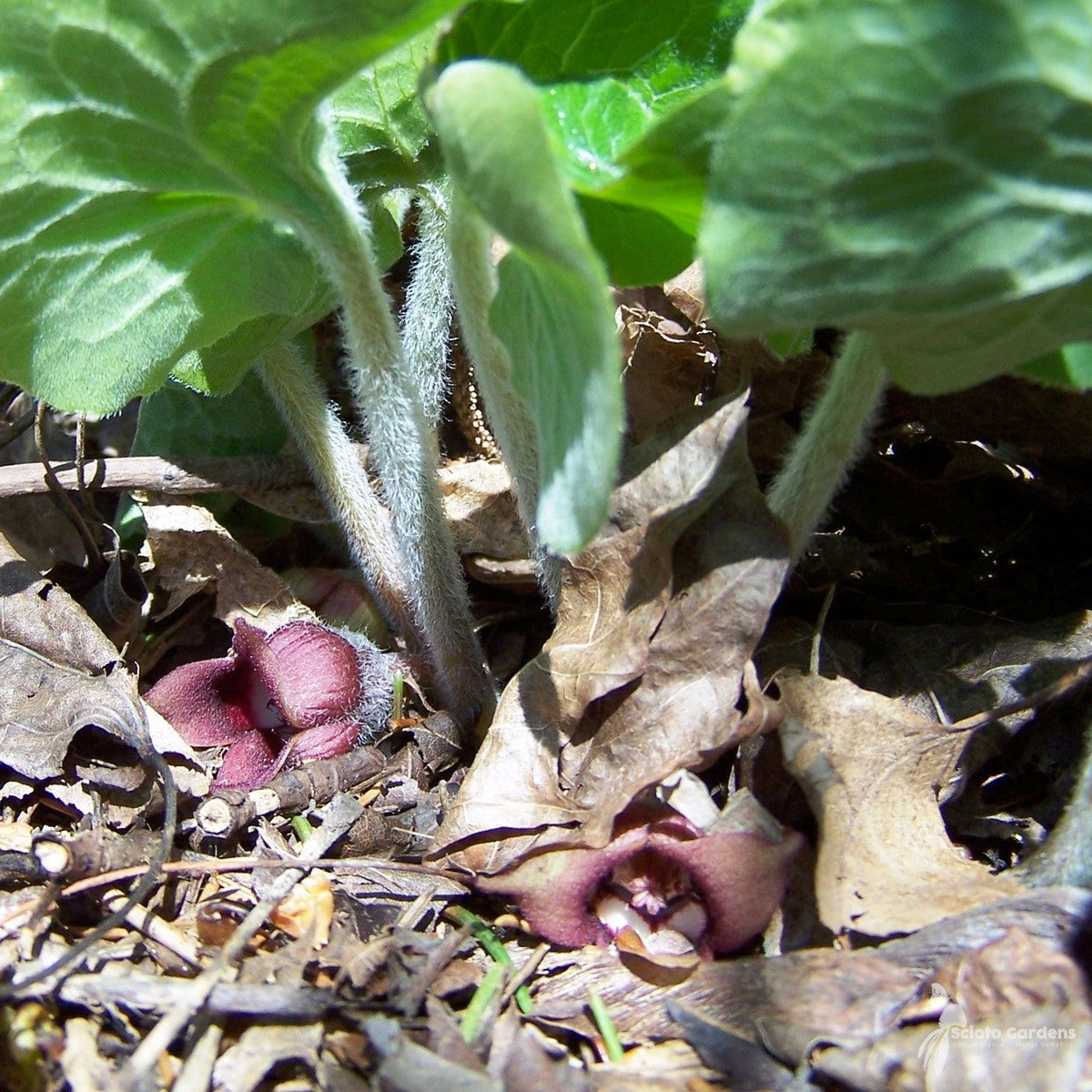
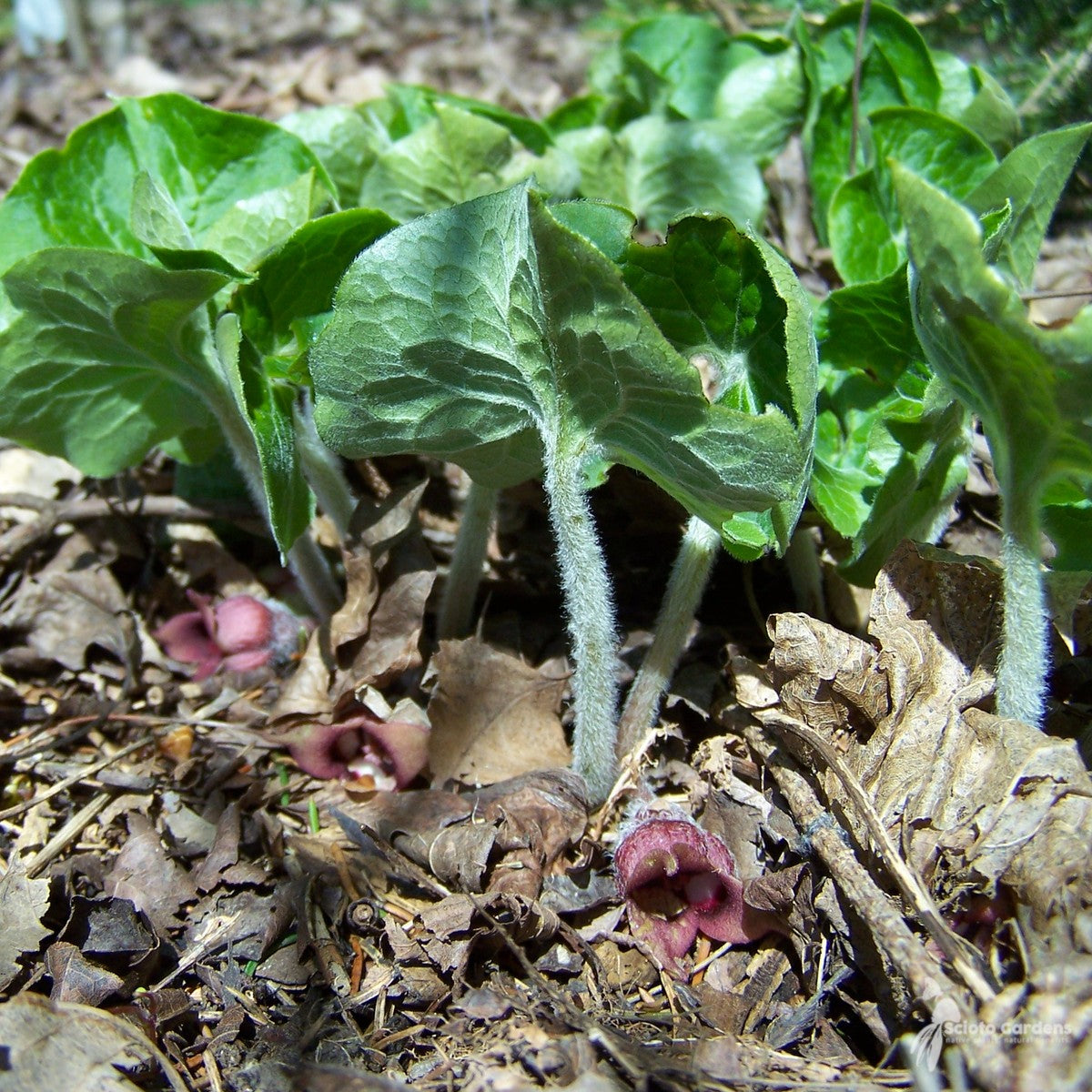
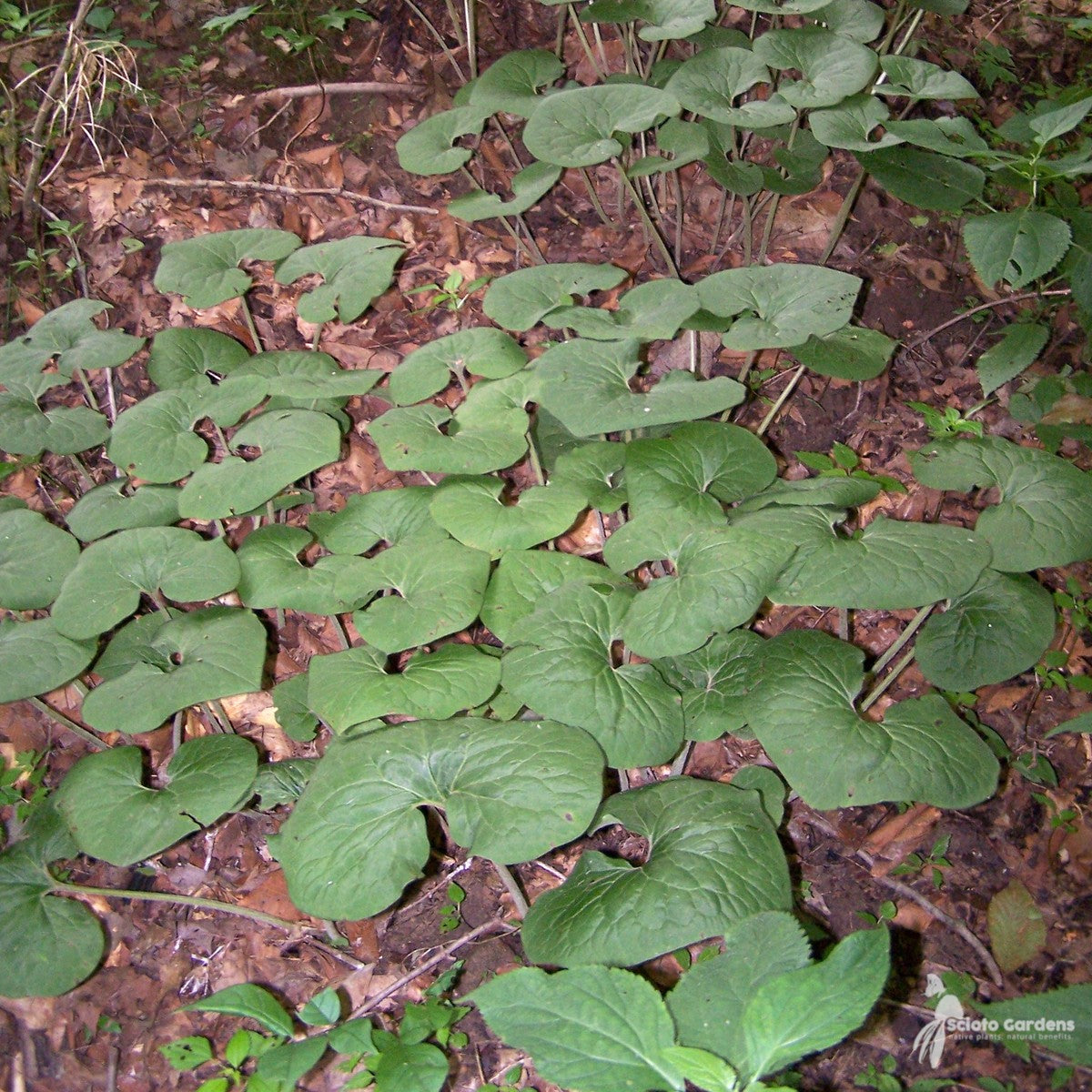
Wild Ginger is a green and beguiling native woodland groundcover. Its velvety soft, heart-shaped leaves emerge in early spring, and it blooms shortly after with fascinating maroon flowers that look as if they're from another world. They are hidden under the newly unfurled foliage, but worth some investigation during the three-week blooming period. The pollinators are primarily small flies and beetles and the seeds, which replace the flowers are diligently planted by ants! The ants gather the fresh seeds once they spill out of the seed capsule. They are carried back to their nests in order to eat the fleshy appendage attached to the seed coat (called elaiosomes) The undamaged seeds are then discarded in their midden heaps, which are a perfectly rich and protected substrate for them to germinate in.The root system is fleshy and rhizomatous, able to expand about 6" in all directions every season in favorable conditions. Wild Ginger prefers cool, moist, rich soils with lots of organic matter in partial to full shade. In time, they will form a dense, overlapping mat of rhizomes that is impenetrable to other plants and weed seeds. It can even out-compete the insidious, non-native Garlic Mustard. There is even more good news: Wild Ginger is unbothered by deer and rabbits, which means getting it to establish and thrive is easy! The volatile oils in the rhizomes have a similar smell and taste to that of culinary ginger. They have been used as a ginger substitute and as a potent medicinal in the past, but it is no longer recommended due to possibly toxic substances contained within the plant.
Sources:
Growing and Propagating Wildflowers by William Cullina
Herbaceous Perennial Plants by Allan M. Armitage
Growing and Propagating Wild Flowers by Harry R. Phillips
Missouri Botanical Garden
Lady Bird Johnson Wildflower Center
Illinois Wildflowers
Mt Cuba Center
