

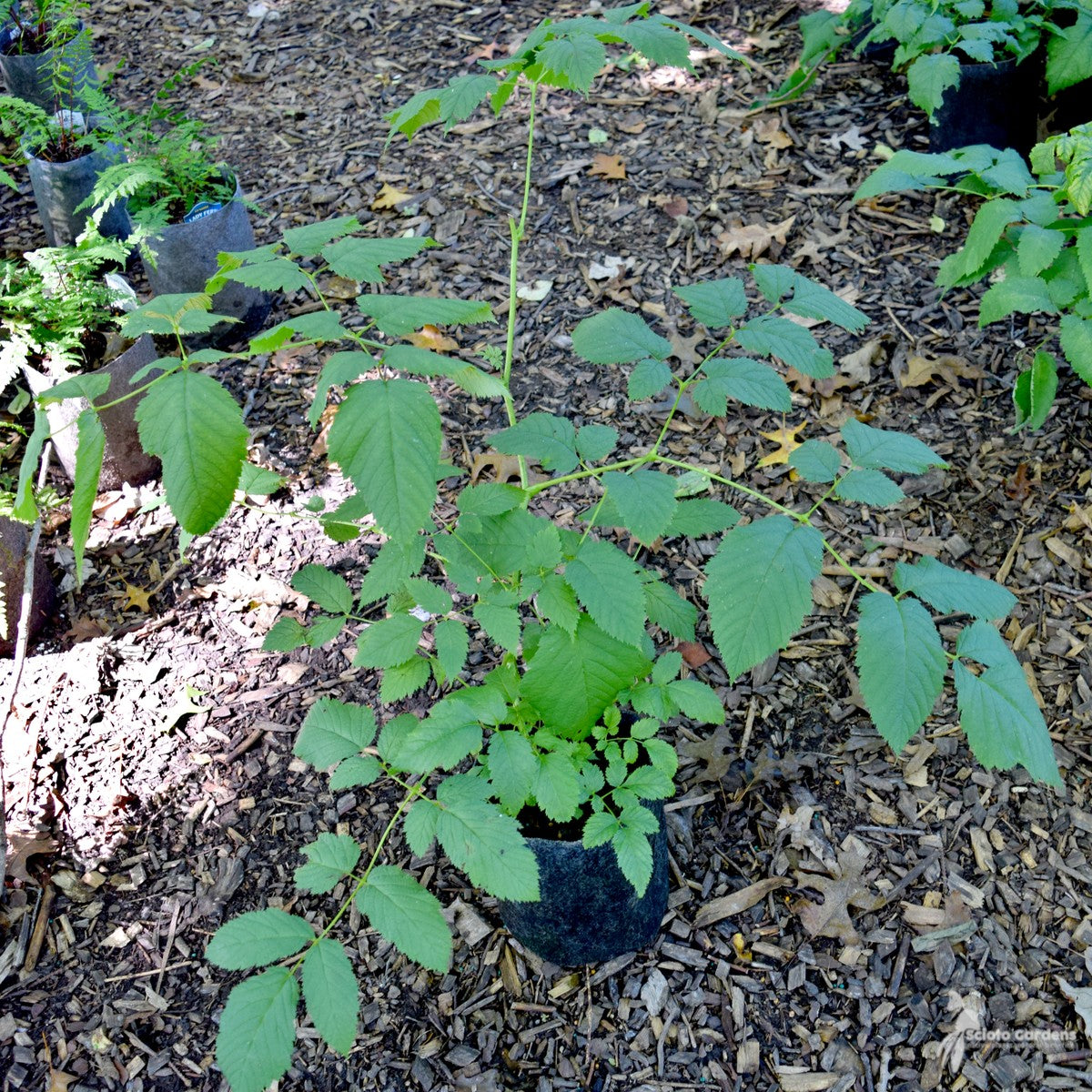
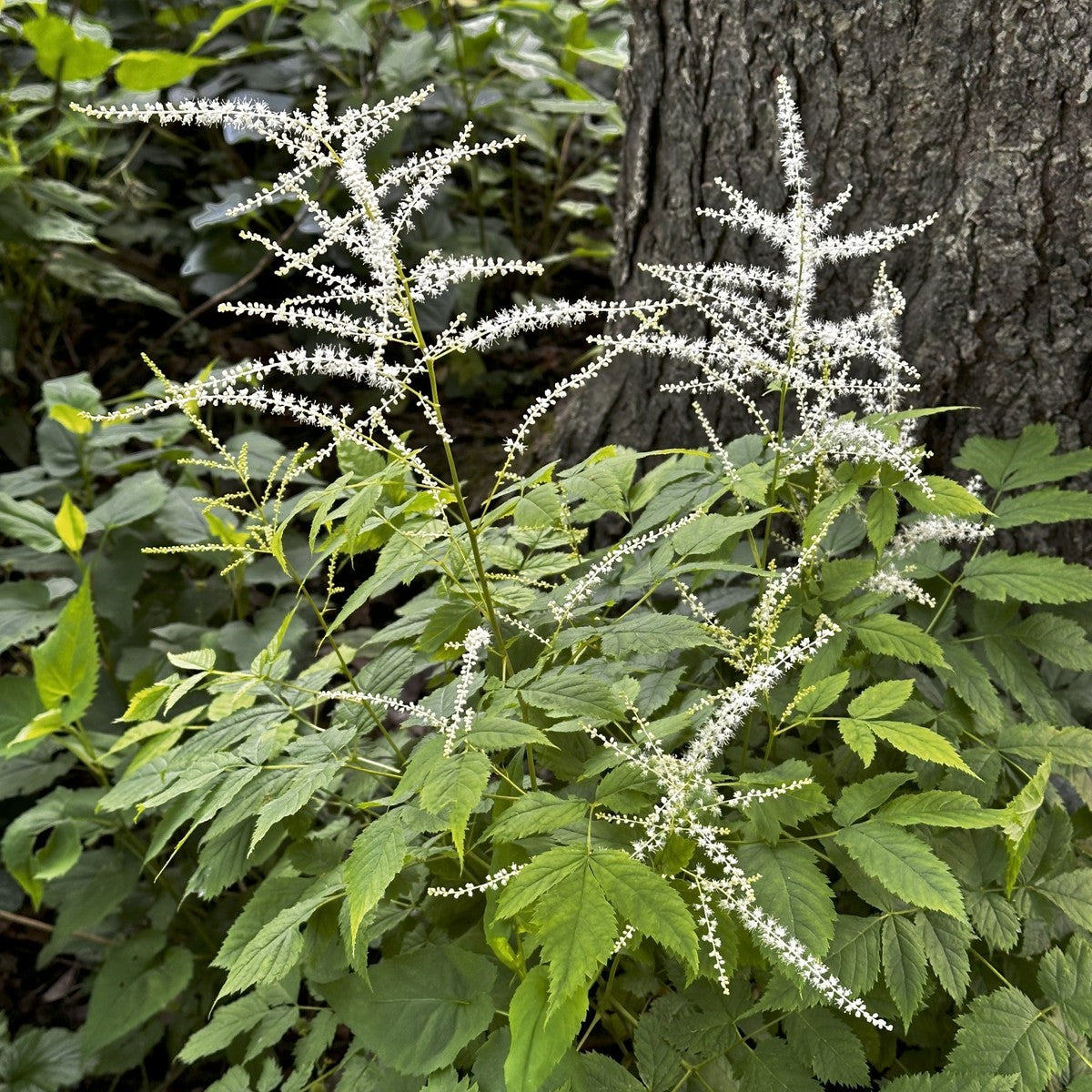
Goat's Beard, also commonly known as Bride's Feathers, is a stunning, large, shrub-like herbaceous perennial native to rich, moist woodlands in much of the northern hemisphere. It can be found growing in damp meadows and along streams, woodland edges, and in ravines. This plant thrives in high-quality environments with fertile, humusy soils that hold ample moisture throughout the hot summer months and under the protection of dappled shade. If it is going to be planted in a sunny area, the cool, gentle morning sun works well, but hot, blazing afternoon sun will scald and stress it. The root system is woody and rhizomatous, but its clonal spread is slow and non-aggressive. It is capable of self-sowing in optimal conditions, but as its Latin name alludes to, this is a dioecious plant (male and female flowers on separate individuals) so both sexes would be necessary for viable seed set. In that case, the flowers can be cut off after blooming to control spread if necessary. It could also be an asset for naturalizing in large shady areas where the stately, spectacular plumes of Goat's Beard would make the space glow with a soft, atmospheric effect. It is also a plant worthy of a home in shrub and perennial borders, as a dramatic specimen, or as a tall backdrop to shorter woodland wildflowers. It is a perfect native substitute for the popular, non-native, large-form Astilbe varieties. The 12" plumes of creamy white flowers in early summer attract a myriad of hungry pollinators who receive nectar from pistillate (female) plants, and both nectar and pollen from the slightly larger and showier staminate (male) flowers. It is an excellent nectar plant, as the cacophony of delighted buzzing can attest to! Goat's Beard is the only known host plant for the diminutive Dusky Azure butterfly who will overwinter on the foliage as a pupa and emerge as an adorable butterfly in April! It can be spotted nectaring at the flowers, along with many other Lepidoptera.
Sources:
Growing and Propaga
