

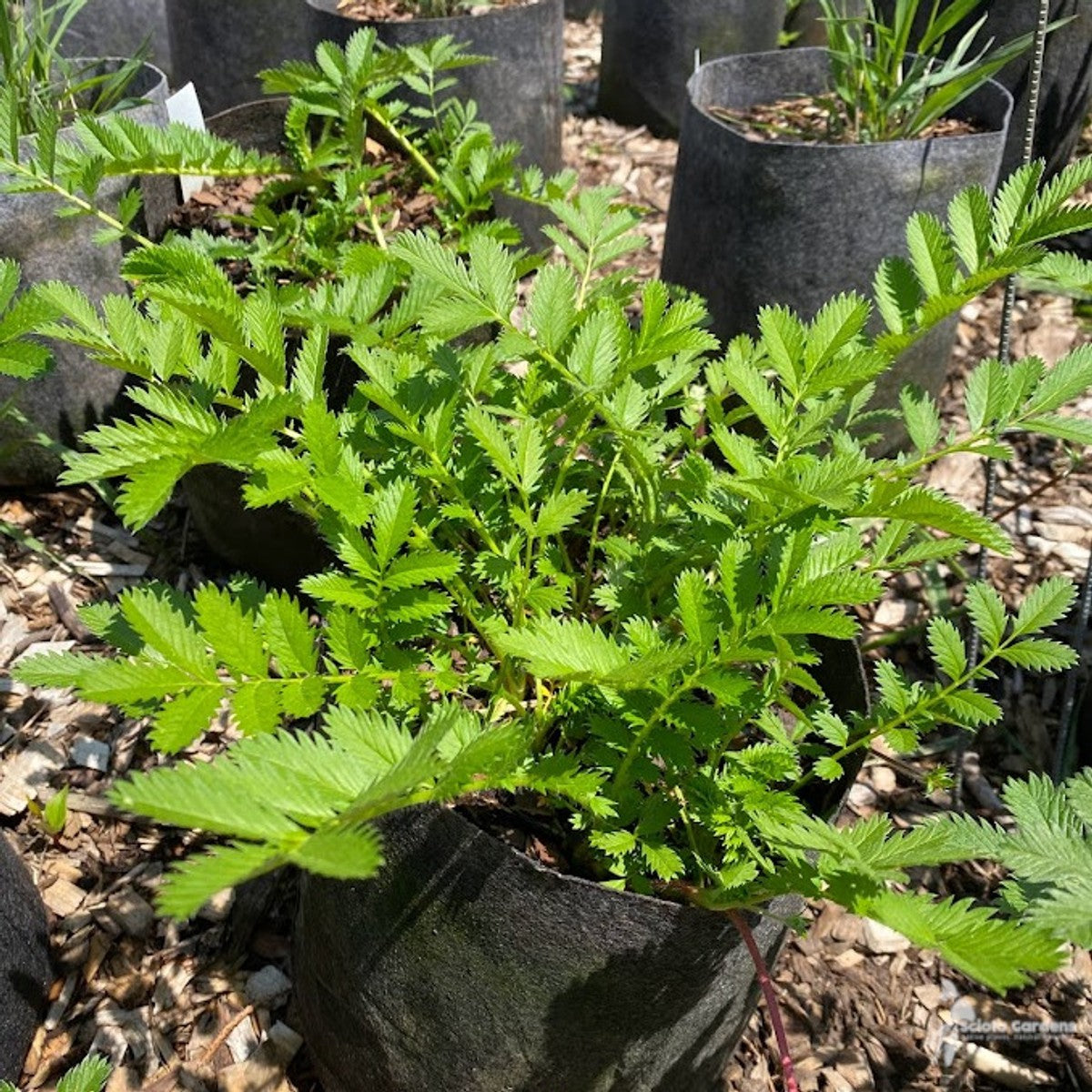
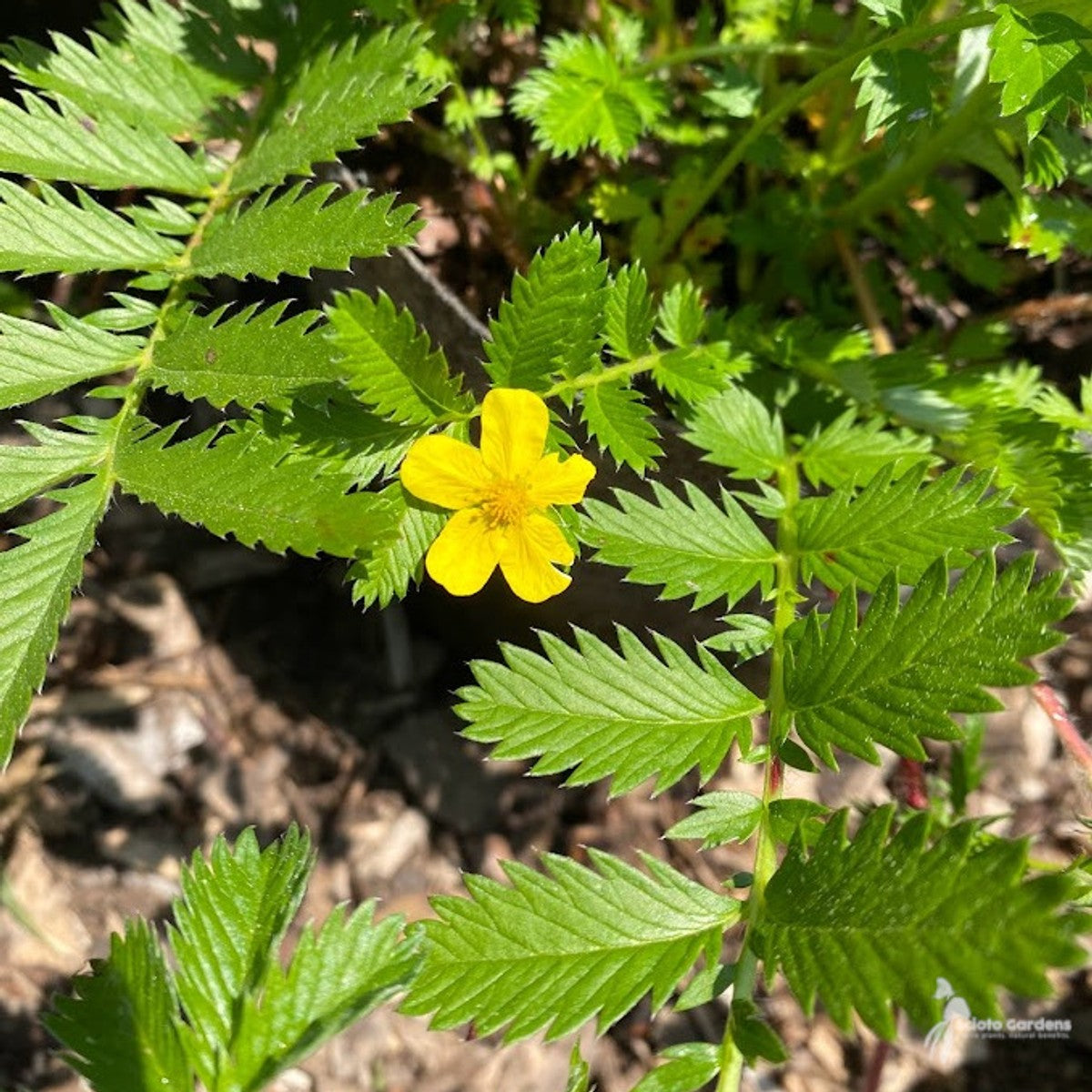
Silverweed, also known as Silver Cinquefoil, is a low-growing, stoloniferous groundcover native to much of North America and parts of Europe and Asia. Its preference is for wet to mesic conditions in full sun, with a sandy or gravelly soil. It excels at erosion control, and is an excellent choice for stabilizing sandy areas, slopes, roadside ditches, pond edges, or stream sides. The red, strawberry-like runners will root from the nodes into moist ground and start new plants as basal rosettes. It is a pioneering species that can spread rapidly this way, as well as by seed, but it is not highly competitive and is easily overtaken by taller plants. The compound, highly dissected leaves are medium green above and beautifully silver underneath, giving this plant its common names. When the wind blows over a patch of Silverweed, the leaves dance, revealing flashes of silver. Bright and cheerful, solitary, 5-petaled yellow flowers appear from the nodes of the red stolons all summer long. The quantity of blooms corresponds with periods of active growth. They offer both pollen and nectar to the various bees and flies that cross-pollinate the flowers. The seeds that follow pollination are able to float on water and also get blown around by the wind. This plant is edible from roots to shoots, with its spring taproot being likened to parsnips or sweet potatoes in taste. The leaves can be eaten in salads or stews, or brewed as tea for their supposed medicinal properties, such as inflammation reduction. As with any wild edible or medicinal plant, proper research should be done before consuming it. Our stock of Silverweed has been propagated from a plant that was originally from the Heritage Garden at the Governor's Residence in Columbus, Ohio.
Sources:
Peterson Field Guide to Edible Wild Plants Eastern/Central North America by Lee Allen Peterson
Missouri Botanical Garden
Lady Bird Johnson Wildflower Center
Illinois Wildflowers
