


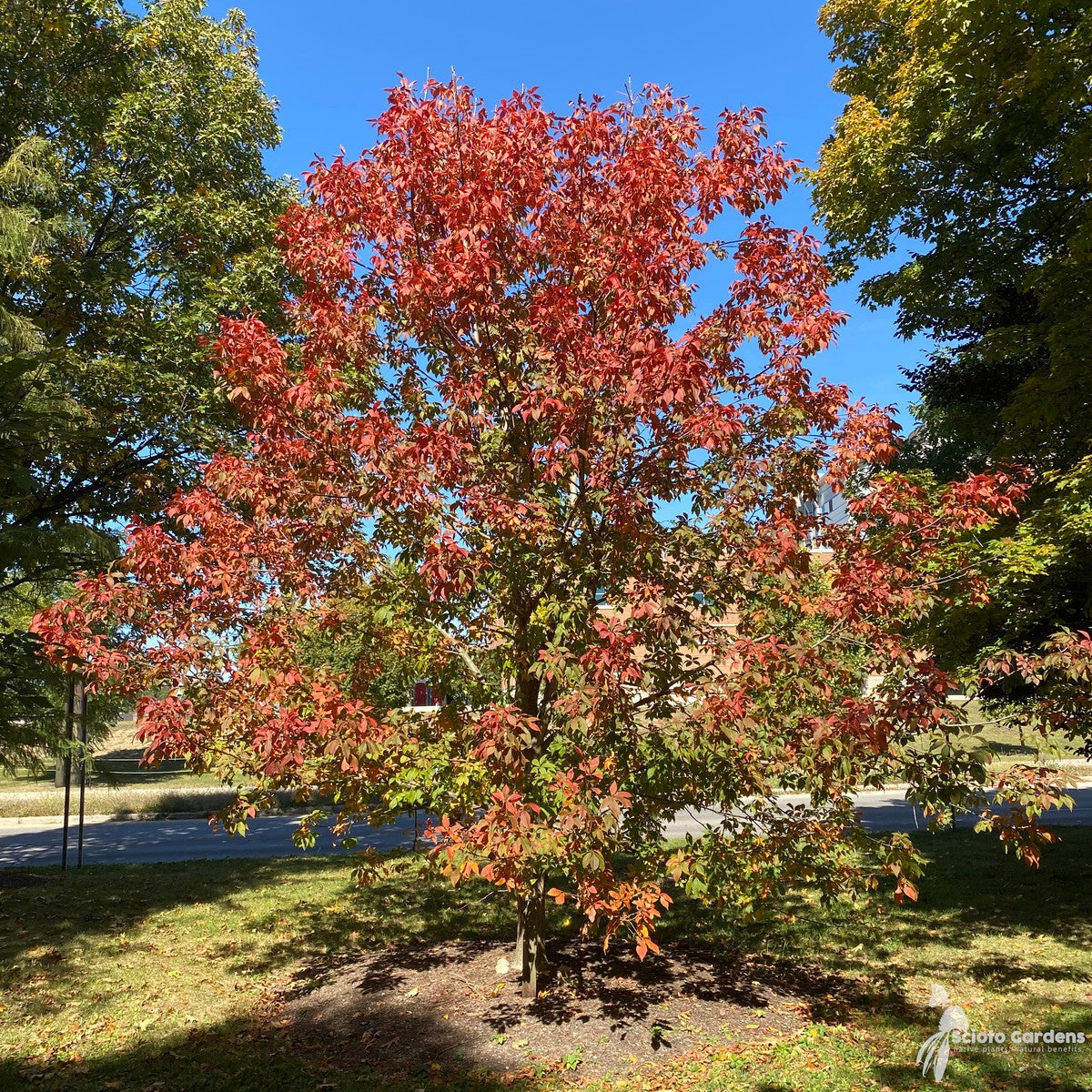
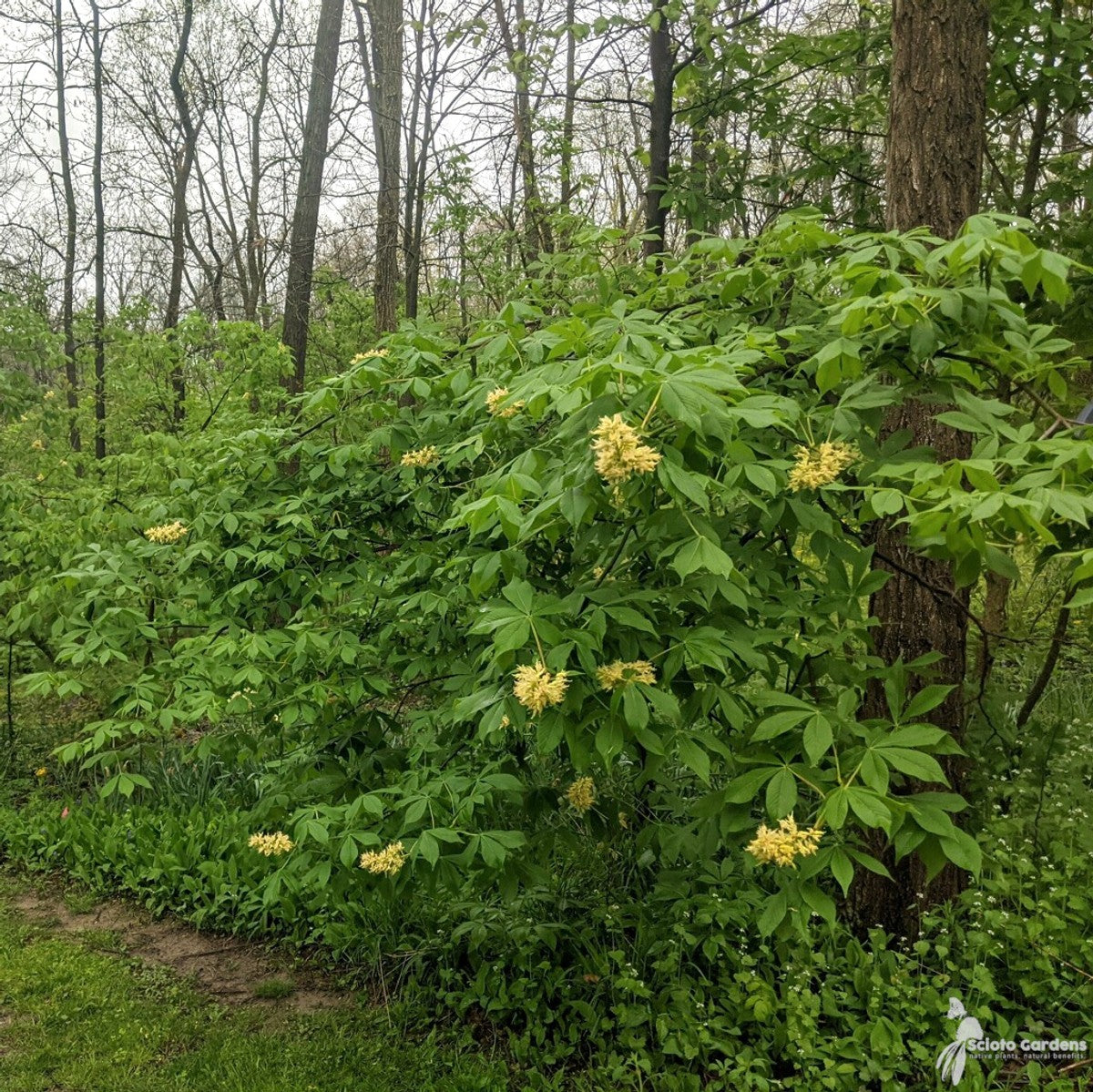
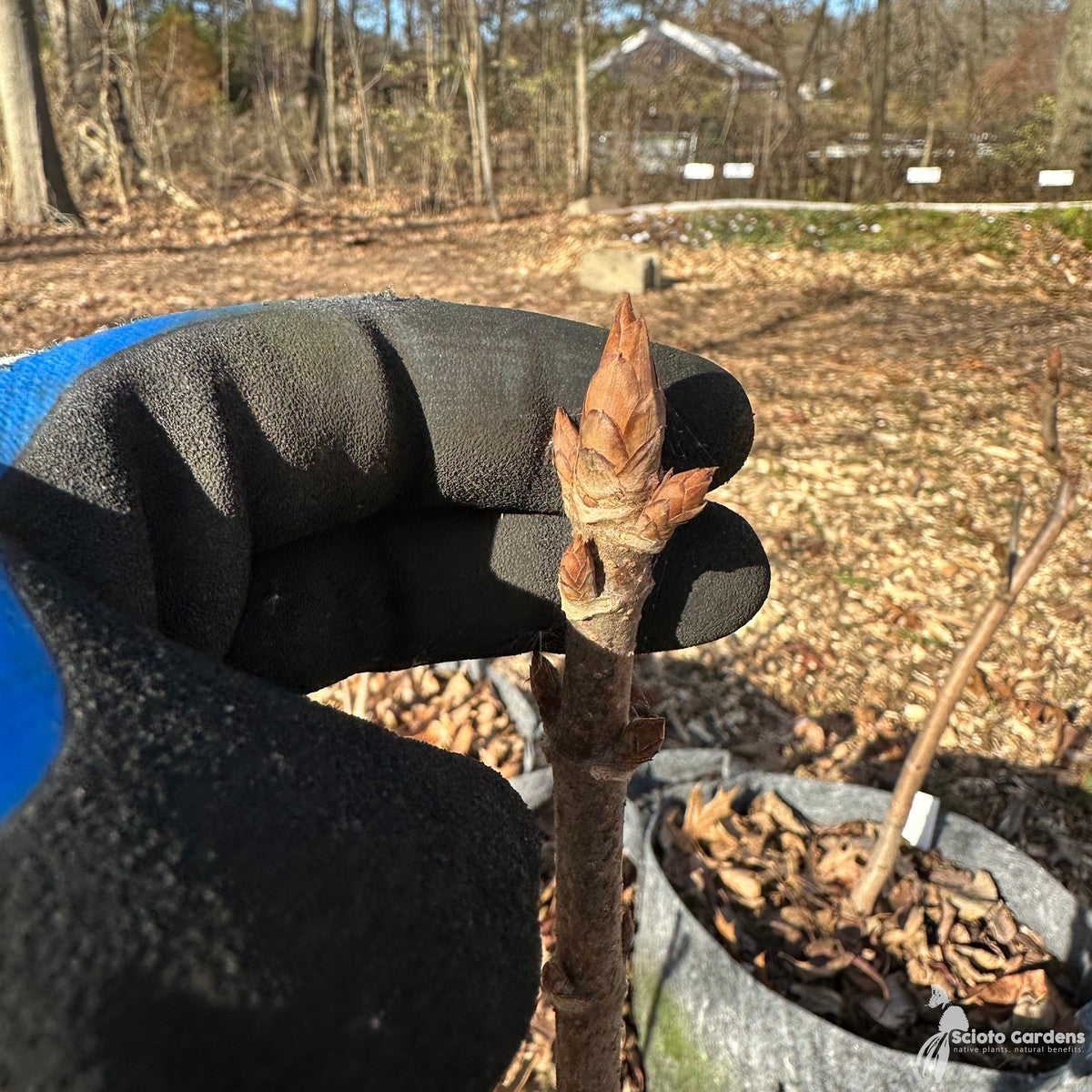
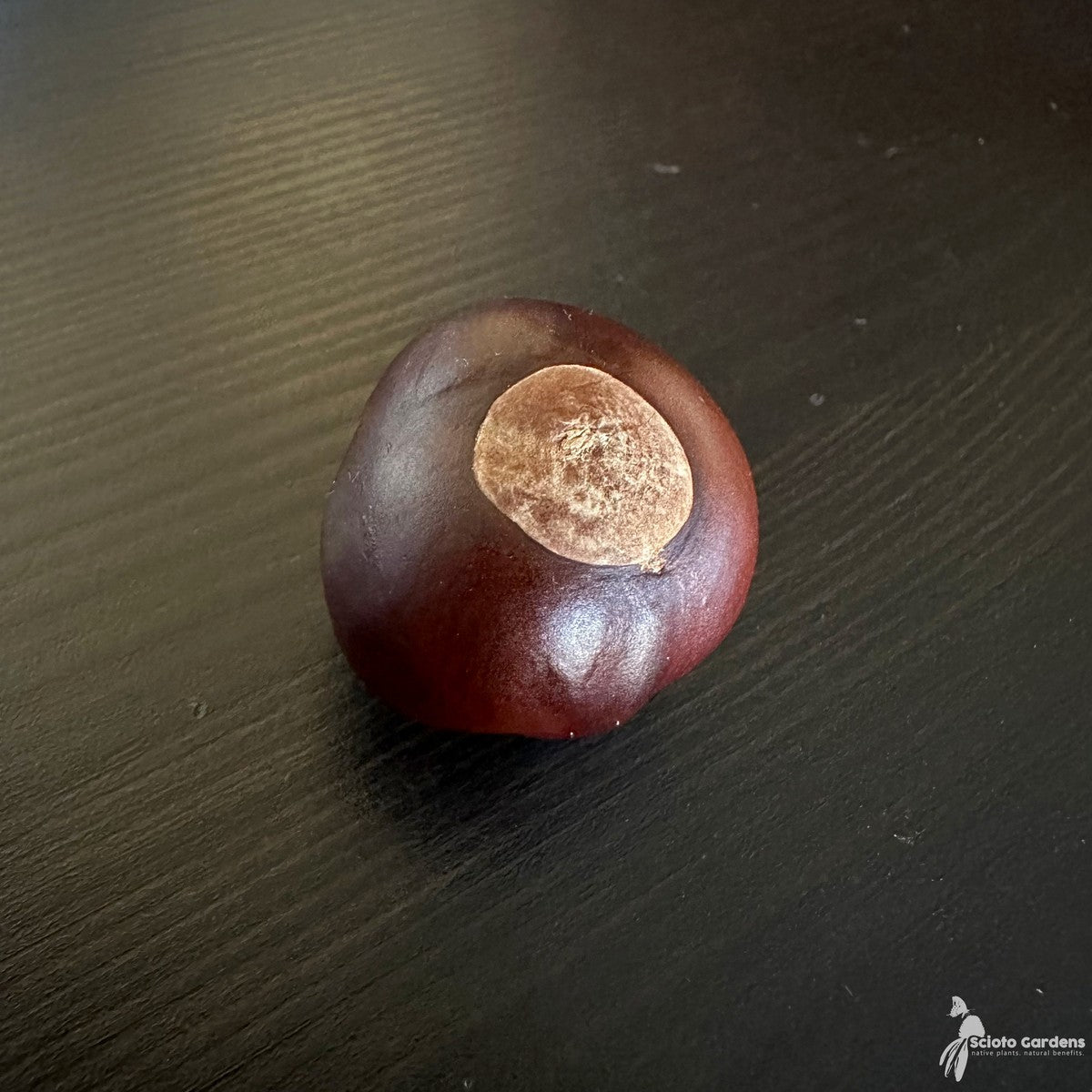
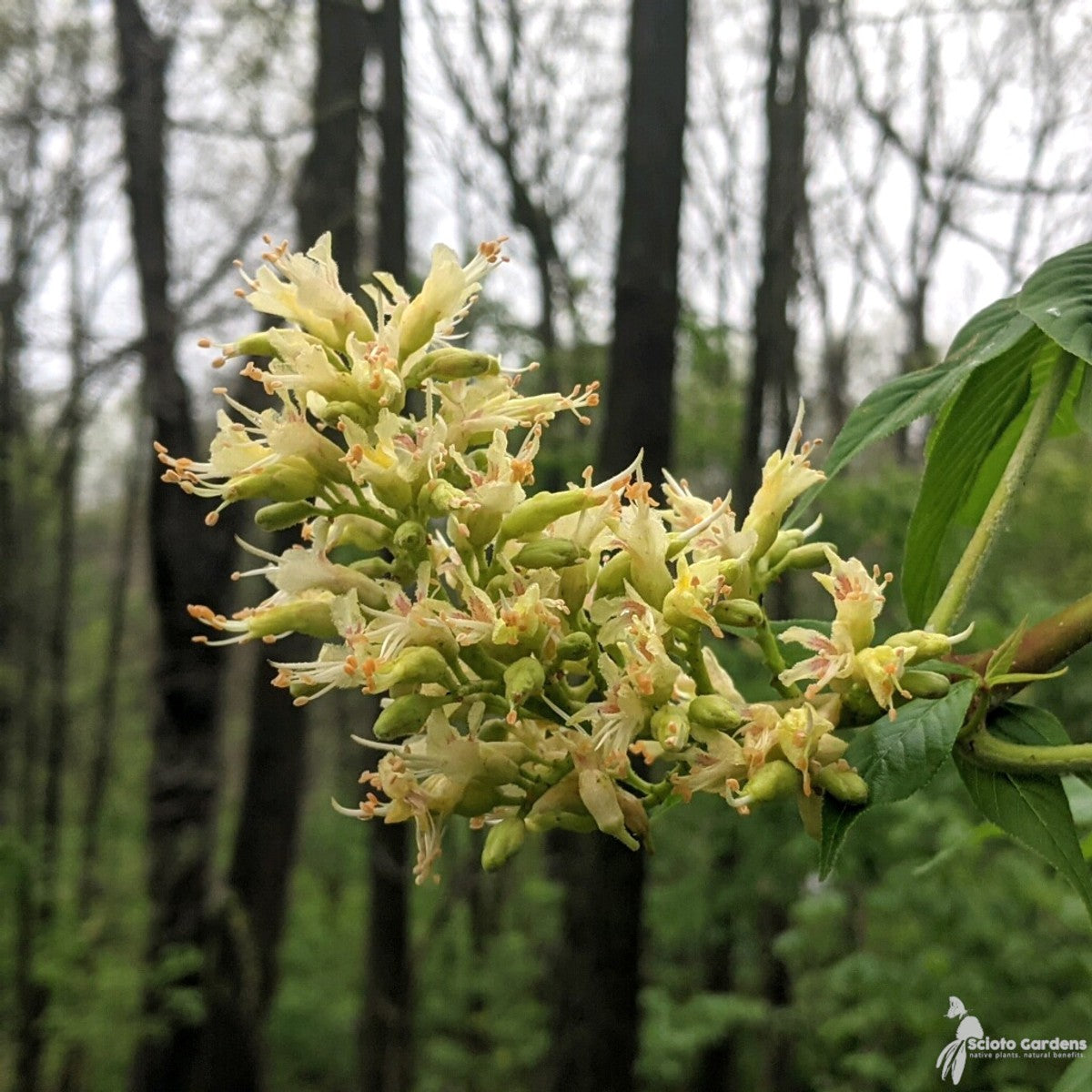
The Ohio Buckeye is the State Tree of Ohio! In the wild, it occurs in bottomlands and rich woods, but it is cultivated as a landscape tree as well. It prefers moist, well-draining soils that are slightly acidic in pH. It does best planted in a protected location, out of harsh, hot sun and wind, which can cause its leaves to scorch and drop. Buckeyes leaf out early in the spring, occasionally making them susceptible to frost damage. They flower in April or May with creamy, greenish-yellow upright clusters (panicles) for 2-3 weeks, which are a lovely early source of nectar for pollinators, primarily Ruby-Throated Hummingbirds and long-tongued bees.
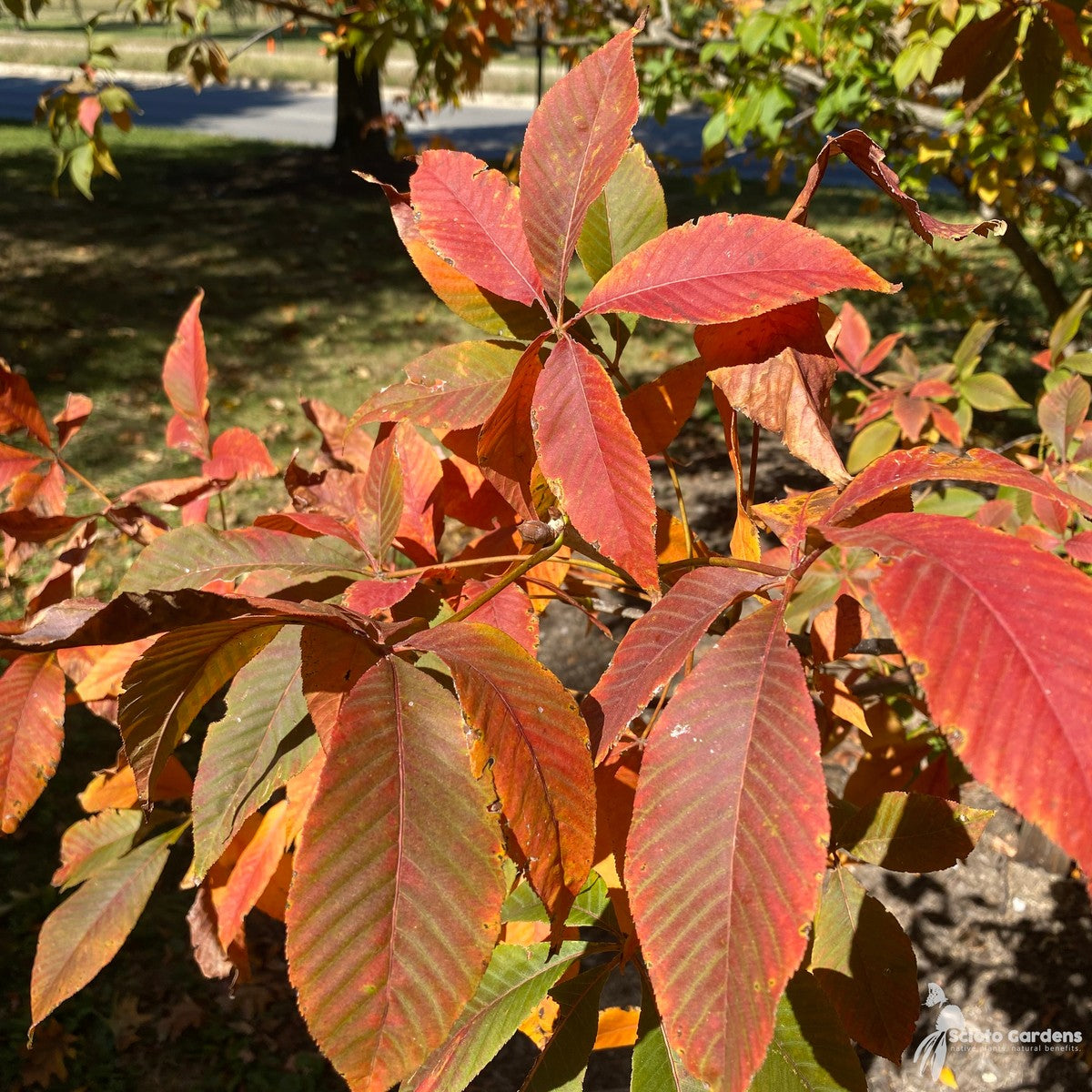
Ohio Buckeyes do best in partial sun in a wilder, more natural part of the landscape or in a wooded setting. They tend to make a mess in the fall with their twigs, leaves, seeds, and husks falling all around them, so they are not typically well-suited to plantings around the house or street. In good years where they receive adequate moisture and protection from drought and scorching sun, they can put on a beautiful show in autumn with bright yellow to pumpkin orange foliage, before they drop their leaves (which can be earlier than most other trees).
Sources:
Native Trees, Shrubs, & Vines by William Cullina
Manual of Woody Landscape Plants by Michael A. Dirr
Missouri Botanical Garden
Lady Bird Johnson Wildflower Center
Illinois Wildflowers
The Morton Arboretum-Black Walnut Tolerance
