


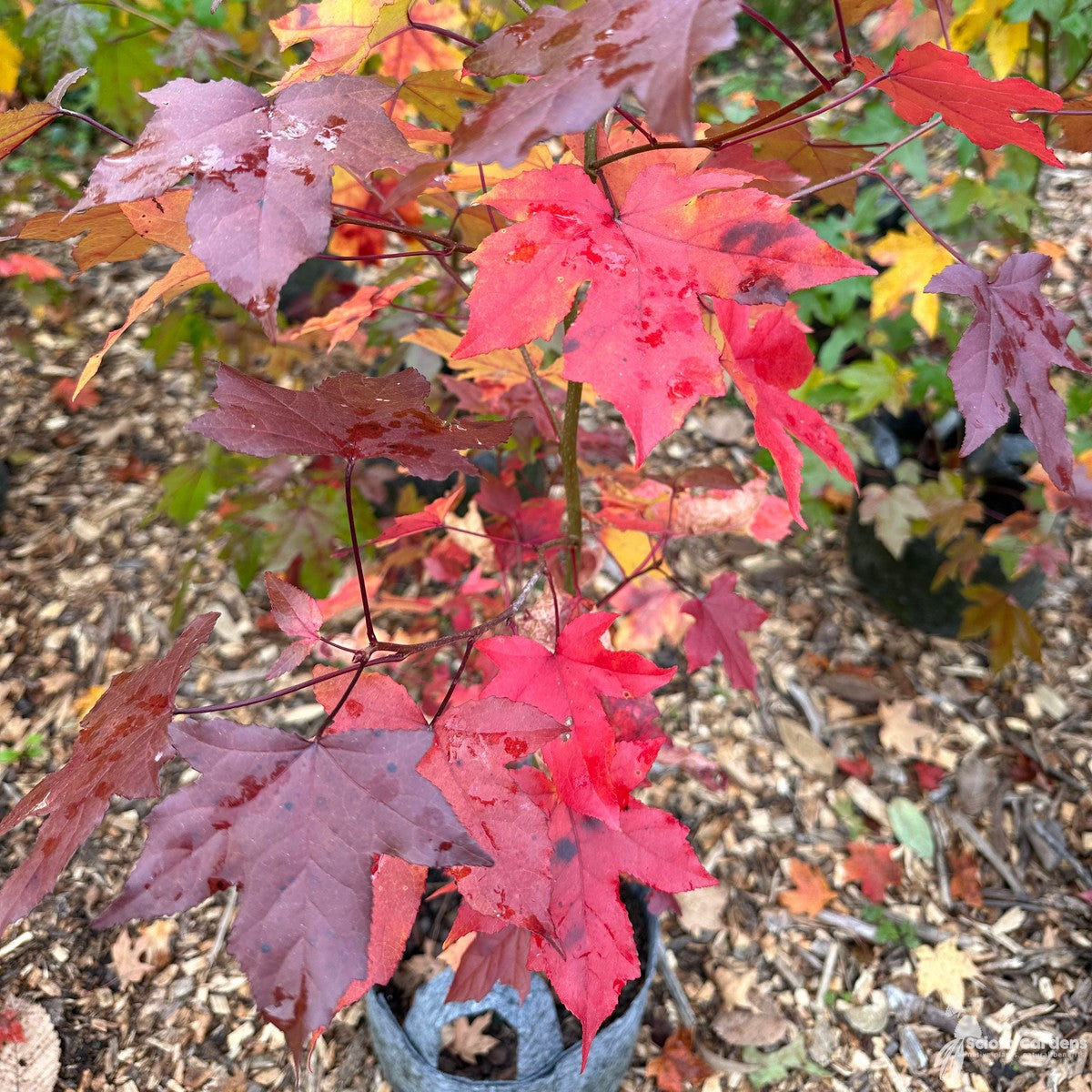
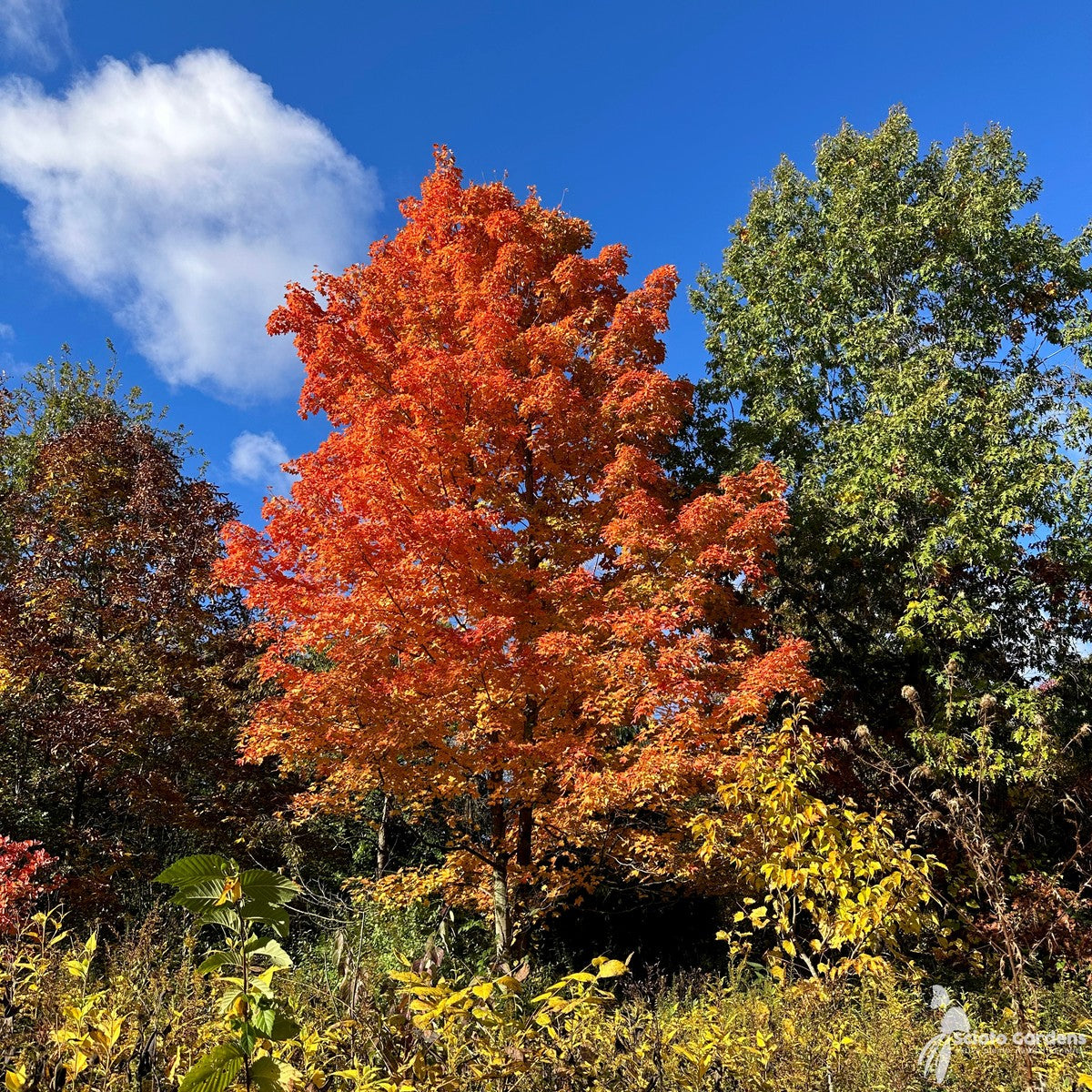
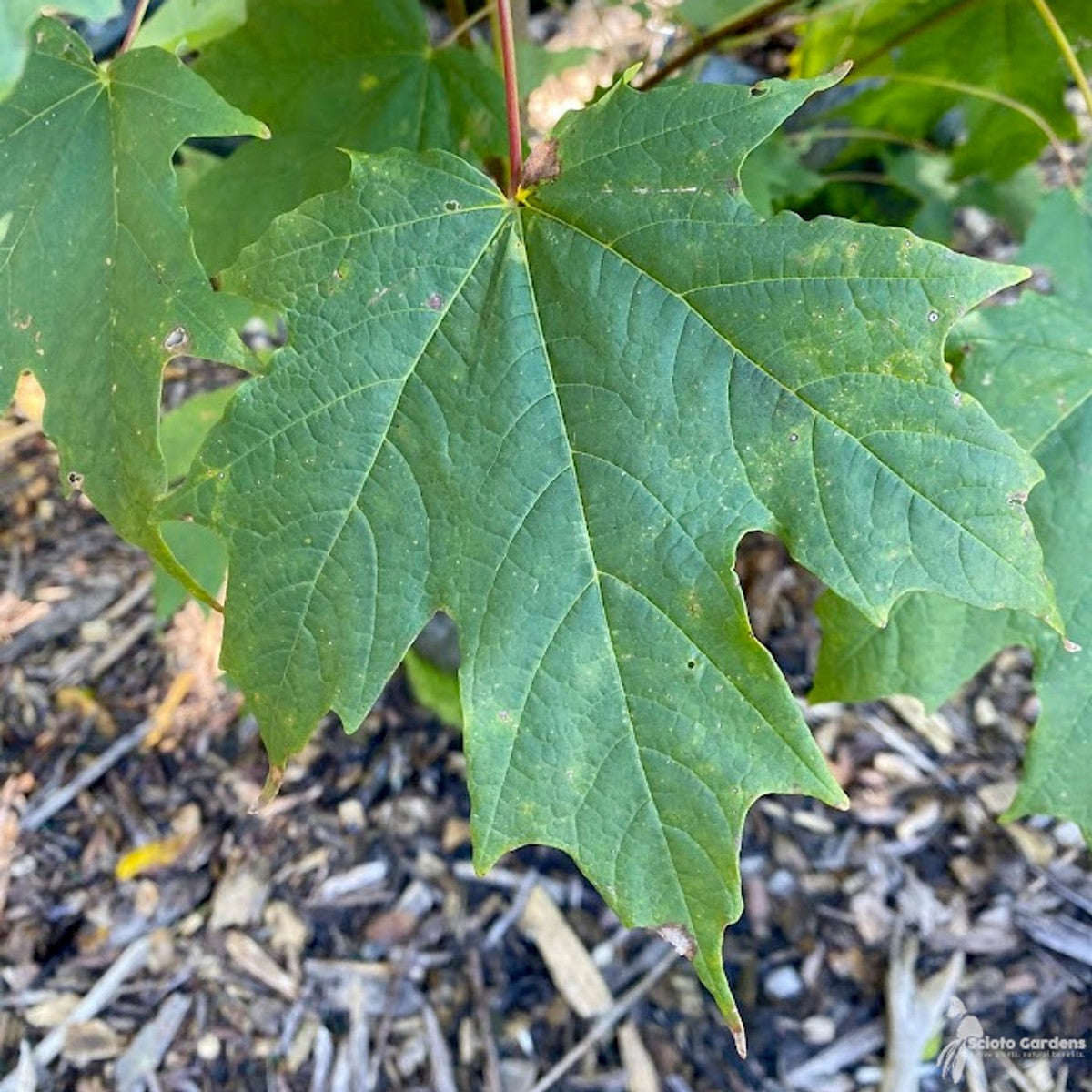
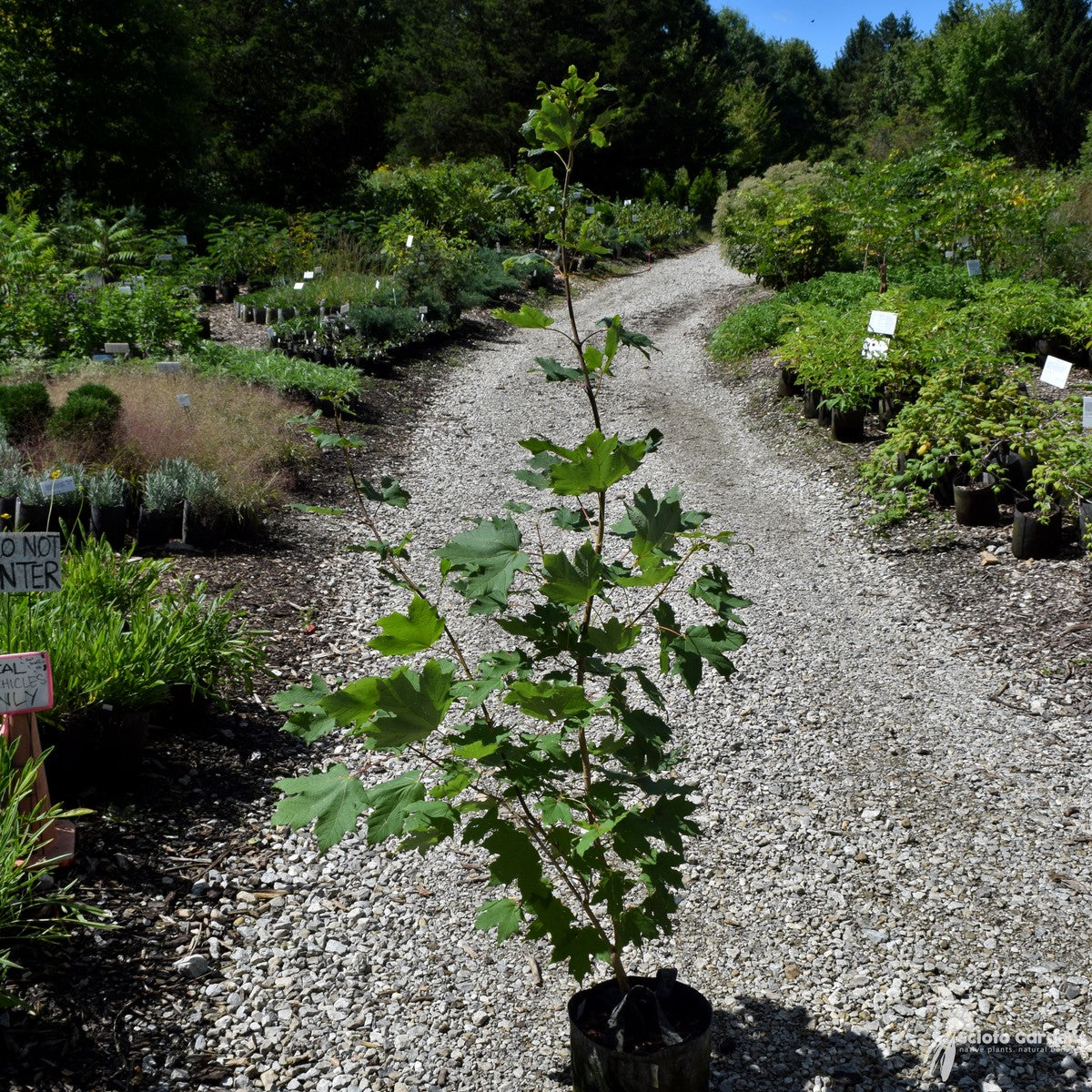
Sugar Maple is a beautiful, robust native shade tree with a dense, rounded crown. It is a keystone species in the Northeastern and Midwestern US and Canada, and is responsible for some of the most dazzling and breathtaking fall color. It graces many lawns and parks with its excellent shade and well-behaved growth habit. It is a wonderful tree for home gardens if there is ample space to stretch out. It has a relatively shallow root system, so underplanting can be difficult. It is also highly intolerant of road salt, so take this into consideration when siting the plant near roads or sidewalks.
Sugar Maples have a very high ecological value. They are host to at least 238 species of Lepidoptera, providing insectivorous birds a multitude of caterpillars during nesting season to feed their young. Flowering occurs in early spring and cross-pollination is performed by the wind. The familiar “helicopter” seeds, actually called samaras, are formed in pairs in late spring to early summer. Once they ripen, they come twirling down, dispersed far and wide by the wind. Some songbirds and upland gamebirds will eat the seeds. The trees provide much-needed protective cover, nesting cavities, food, and sap to numerous wild creatures.
Sources:
Native Trees, Shrubs, & Vines by William Cullina
Manual of Woody Landscape Plants by Michael A. Dirr
Missouri Botanical Garden
Lady Bird Johnson Wildflower Center
Illinois Wildflowers
The Morton Arboretum-Black Walnut Tolerance
